Complete Guide: Sensory-Friendly Back-to-School Essentials for Autistic Children

Last updated: October 11, 2026 | Written by Dror Arbel, a parent of an autistic child (not a clinician)
Going back to school means noise, crowds, new routines and hours of sitting still. For many autistic children that is exhausting before learning even starts. The tools below are simple, inexpensive supports that can make the school day more comfortable. None of them is a treatment, and what helps one child may not help another.
Why sensory tools matter at school
Sensory processing differences are very common in autism; one widely cited study found them in about 95% of the autistic children assessed (Tomchek & Dunn, 2007). A classroom can be loud, bright and unpredictable. Tools that lower noise, make time visible or remove a scratchy tag can free up energy for learning.
Be realistic about the evidence. Visual supports have good research behind them. Fidgets, wobble cushions and weighted items have mixed or limited evidence: some children clearly benefit, many see no change. The best test is a short trial: use a tool for two to three weeks and ask your child and the teacher what changed.
10 sensory-friendly school essentials
Disclosure: the buttons below are Amazon affiliate links (tag 101autism-20). If you buy through them, we may earn a small commission at no extra cost to you. Links open an Amazon search so you can compare current options, sizes and prices.
Noise-reducing headphones or ear defenders
For children bothered by classroom noise, hallways, assemblies and the cafeteria. Kids’ models limit volume when used with a device.
Tip: Agree with the teacher when they can be worn, so they help rather than isolate.
Puro Sound Labs PuroQuiet on AmazonVisual timer
Shows time passing as a shrinking colored disk, which makes “5 more minutes” and transitions easier to understand.
Tip: Useful at home for homework and morning routines too.
Time Timer on AmazonVisual schedule
Picture cards for the day’s sequence. Visual supports are one of the evidence-based practices listed in the NCAEP 2020 review.
Tip: Many teachers already use one; ask whether a personal copy on the desk would help.
SchKIDules visual schedule on AmazonQuiet fidgets
Some children focus better with something in their hands. Research on fidgets is limited, so treat them as a personal tool, not a treatment.
Tip: Pick silent ones and check the school’s fidget policy first.
Quiet classroom fidgets on AmazonThinking putty
A quiet, pocket-sized tactile break that also works hand muscles.
Tip: Keep it away from carpets and long hair.
Crazy Aaron’s Thinking Putty on AmazonChewable necklace (chewelry)
For children who chew sleeves, pencils or collars. Food-grade silicone, made for chewing.
Tip: Check it daily for tears and replace when worn; ask the school about breakaway clasps.
Munchables chewelry on AmazonWobble cushion
Lets children who need to move do it while staying seated. Studies show mixed results, so try it for a couple of weeks and see.
Tip: Inflate it only partly; firmer is not better.
Wobble cushion on AmazonWeighted lap pad
Some children like the feeling of weight on their lap during seated work. Research on weighted vests and pads is limited and mixed.
Tip: Choose a light pad (around 2 to 5 lb) and let your child decide when to use it.
Weighted lap pad on AmazonTag-free, seamless clothing
Scratchy tags and seams can be a real distraction all day. Seamless socks and tag-free basics often help more than any gadget.
Tip: Wash new clothes a few times before the first day.
SmartKnit seamless socks on AmazonPencil grips
Make writing more comfortable for children with low muscle tone or a tiring grip.
Tip: An OT can suggest the right grip style.
The Pencil Grip on AmazonWant several tools in one box?
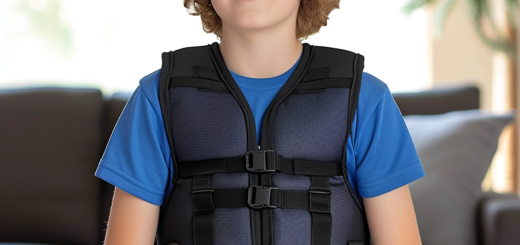
Harkla, a sensory-products company, sells a Classroom Sensory Kit by grade level (Kindergarten to High School). Depending on the grade it bundles a 5 lb weighted lap pad, a body sock, a weighted compression vest, a visual timer, a wiggle seat and noise-reducing headphones — useful if you are setting up a calm corner or a resource room rather than buying items one by one.
- Harkla Classroom Sensory Kits (affiliate link)
- Harkla Weighted Lap Pad (affiliate link) – if you only need the lap pad for one student
We have not tested these products. 101Autism is a Harkla affiliate and an Amazon Associate, so we may earn a commission at no extra cost to you. Weighted items should be used for short periods, never cover the face, and the student must be able to remove them alone; ask the school OT about the right weight.
A screen option for the calm corner: if a short screen break works for your child, our free Sensory Harbor game is slow and predictable, with no timers, no scores and sound you can turn down. It is not therapy, just one more option on a break menu; ask the teacher whether a tablet break fits the classroom rules.
Getting tools approved at school
- Talk to the teacher before day one. Explain what the tool is for and when your child will use it.
- Put it in writing. Sensory supports can be listed as accommodations in an IEP or 504 plan, so they follow your child between classes and years.
- Ask for an OT evaluation if you are not sure which tools fit. School occupational therapists can recommend and trial tools in the classroom.
- Label everything and send a spare of anything your child relies on, like headphones.
Have an IEP or 504 meeting coming up?
The printable IEP & 504 Meeting Prep Kit helps you get sensory supports and other accommodations written into the plan: a three-week countdown checklist, a parent concerns template, an accommodations idea bank for autistic students, questions to ask, and five fill-in-the-blank letters.
See the IEP & 504 Prep Kit (PDF)
15 printable pages from 101Autism.com. An organizing tool, not legal advice.
Frequently asked questions
Do sensory tools really help autistic children at school?
They can help some children feel calmer or more comfortable, but the research is mixed and every child is different. Sensory differences are very common in autism, so it is worth trying a tool for two to three weeks and watching what changes. No tool replaces good classroom support.
Can my child use these tools in class?
Most schools allow them, especially when they are written into an IEP or 504 plan. An occupational therapist evaluation can help you decide which tools to request.
What should I buy first?
Start with one or two tools that match your child’s biggest daily difficulty: headphones for noise, a visual timer or schedule for transitions, or tag-free clothing for touch sensitivity.
Related guides
Discover more from Living with Autism
Subscribe to get the latest posts sent to your email.