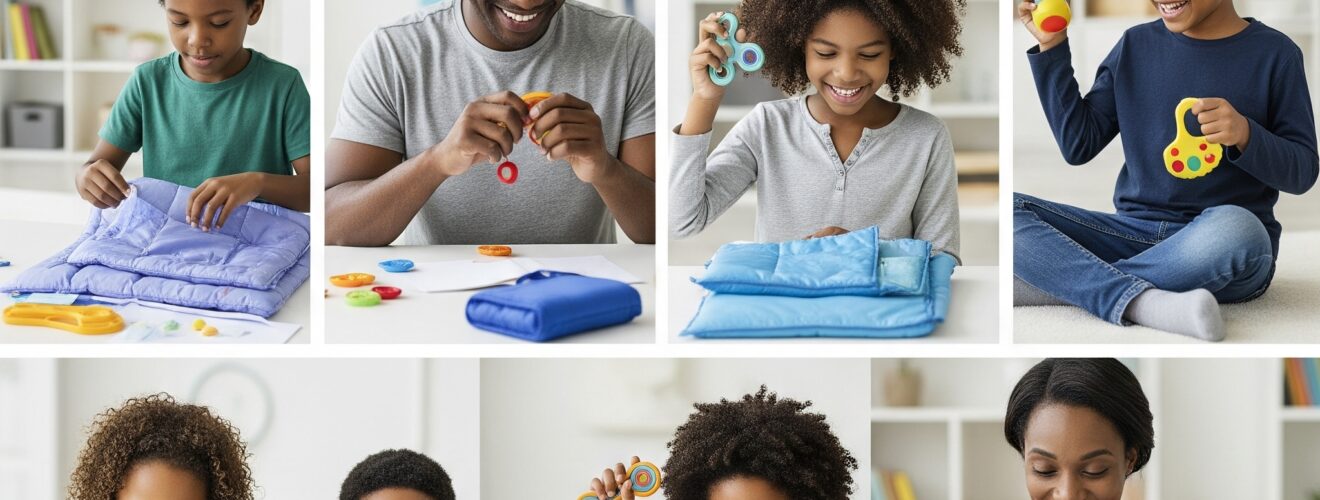
Quick answer: This hub links to our parent-written guides on sensory toys, weighted and deep-pressure products, sensory swings and learning tools for autistic children, teens and adults. Products help some people and not others, and the evidence for most sensory products is limited, so each guide explains what the research does and does not show, with safety notes.
Written by Dror Arbel, a parent, not a clinician. Reviewed November 2026. We have not tested these products ourselves. As an Amazon Associate and Harkla affiliate, 101Autism earns from qualifying purchases made through links in our guides, at no extra cost to you.
Sensory & Fidget Toys
Many autistic people seek or avoid certain kinds of touch, movement or visual input. A fidget or sensory toy can be a simple, low-cost way to meet those needs, though research on focus benefits is mixed. Explore our guides:
Weighted Products & Deep-Pressure Tools
Many people find deep pressure calming, but research results are mixed: a randomized trial in autistic children found weighted blankets did not improve measured sleep, although children and parents preferred them (Gringras et al., 2014). Stimming is not something that needs to be reduced unless it causes harm. Start here:
The Ultimate Guide to Sensory Swings for Autistic Children
Educational Tools & Learning Apps
Inclusive Awareness Gear
Show support with designs featuring the infinity symbol and, for legacy fans, the puzzle motif:
Top Wood Blocks for Skill-Building
Why open-ended wooden play boosts fine-motor and cognitive growth »
FAQs
What sensory toys do autistic adults use?
Common choices include weighted lap pads, quiet fidgets, textured items and noise-reducing headphones. Preferences vary a lot, so start small and keep what actually helps. Read the full guide here.
How heavy should a weighted blanket be?
Manufacturers often use about 10% of body weight as a rule of thumb, but this is not research-based. The person must be able to remove it on their own, and weighted blankets are not for infants or toddlers. See safety tips in our blanket guide.
Which educational apps help autistic learners?
Visual, game-based platforms like ABCya and our free Sensory Harbor calming game work well for some learners. See also our guide to free sensory apps.
Revolutionizing Autism Support: The Promising Impact of Artificial Intelligence

.article-meta { color: #666; font-size: 0.9rem; margin-bottom: 0; } Skip to main content Home › Autism Support › AI and Autism Published: May 15, 2023 • Updated: January 15, 2024 • By 101 Autism Key Insight: Artificial Intelligence is transforming autism support through three revolutionary approaches: early diagnosis using pattern recognition, personalized therapy with AI-powered…
Adult Autism Traits Screener (AQ-10) | Explore Online
Important Disclaimer: This is a screening tool example based on the AQ-10 questionnaire. It is NOT a diagnostic tool and cannot replace a comprehensive evaluation by a qualified healthcare professional (like a psychologist or psychiatrist). Results indicate potential traits that may warrant further discussion with a professional. This tool does not collect or store any…
FDA Clears Neurora, a New AI Tool to Help Diagnose Autism in Children (2026)
The FDA cleared Neurora, an AI tool that helps clinicians diagnose autism in kids 18 months to 12 years. What it does, what it doesn’t, and what parents should ask.
Best Weighted Blankets for Autistic Kids (2026): Safety, Sizing & Options
Written by Dror Arbel, a parent of an autistic child (not a clinician). Last updated October 2026. Disclosure: we have not tested these blankets, and we don’t sell them. 101Autism is a Harkla affiliate, an Awin partner (Mosaic) and an Amazon Associate, so we may earn a commission if you buy through our links, at…
Autism Test Score Explainer: SRS-2, ADOS-2, CAT-Q & RAADS-R
Free tool: what your SRS-2 T-score, ADOS-2 comparison score, CAT-Q or RAADS-R total means in plain language.