Autism Self-Diagnosis in Adults: What Screening Tests Can (and Can’t) Tell You
Written by Dror Arbel, a parent, not a clinician. Last updated October 2026. This article is for information only and is not a diagnosis.
Short answer: Yes, adults can self-identify as autistic, and many do. Self-identification is common and widely accepted in the autistic community. It is not a medical diagnosis, though. Online screeners such as the AQ, RAADS-R and CAT-Q can help you notice patterns, but they produce many false positives and false negatives. If you need services, accommodations or legal protection, you will usually need a formal assessment by a qualified clinician.
Have you ever felt fundamentally “different” from your peers? Do you find yourself exhausted after a simple social gathering? Do small changes to your routine feel like a major disruption? If you have typed “autism test” into a search engine, you are not alone. A growing number of adults are looking for an explanation for a lifetime of feeling out of place.
For many people, self-identifying as autistic is a personal process driven by self-understanding and a wish to belong. It is not just a cultural trend. It also reflects how much the diagnostic criteria have changed, who was missed in the past, and how online communities have made autistic experiences more visible. This guide explains what self-identification means, what the common screening tools can and cannot tell you, and when a formal evaluation is worth considering.
TL;DR: Key Takeaways
- The lost generation: many adults, especially women and people who are now older, were missed as children because earlier criteria and stereotypes were narrow (Lai & Baron-Cohen, 2015).
- Screening tools: the AQ, RAADS-R and CAT-Q can point to autistic traits, but none of them can diagnose or rule out autism.
- Masking: many autistic adults learned to hide their traits. Research links camouflaging with exhaustion, anxiety and depression, and it can lower screening scores.
- Self-ID vs formal diagnosis: self-identification can bring understanding and community. A formal diagnosis is what usually unlocks services, accommodations and legal protections.
The “Lost Generation”: A History of Missed Diagnoses
For decades, autism was described in narrow terms that mostly fit young boys with obvious language delays or intellectual disability. Asperger syndrome entered the DSM only in 1994, and the single “autism spectrum disorder” diagnosis arrived with the DSM-5 in 2013. Many people who grew up before these changes were never assessed. In a 2015 review in The Lancet Psychiatry, researchers Meng-Chuan Lai and Simon Baron-Cohen called these under-identified adults a “lost generation.”
This group includes many women, older adults and people without an intellectual disability, as well as people from communities with less access to assessment. Many of them describe years of struggles with work, relationships and mental health before autism was ever mentioned. For them, self-identification is often not a casual choice. It can be the first explanation that makes sense of lifelong challenges.
The Unspoken Struggle: What Is Masking?
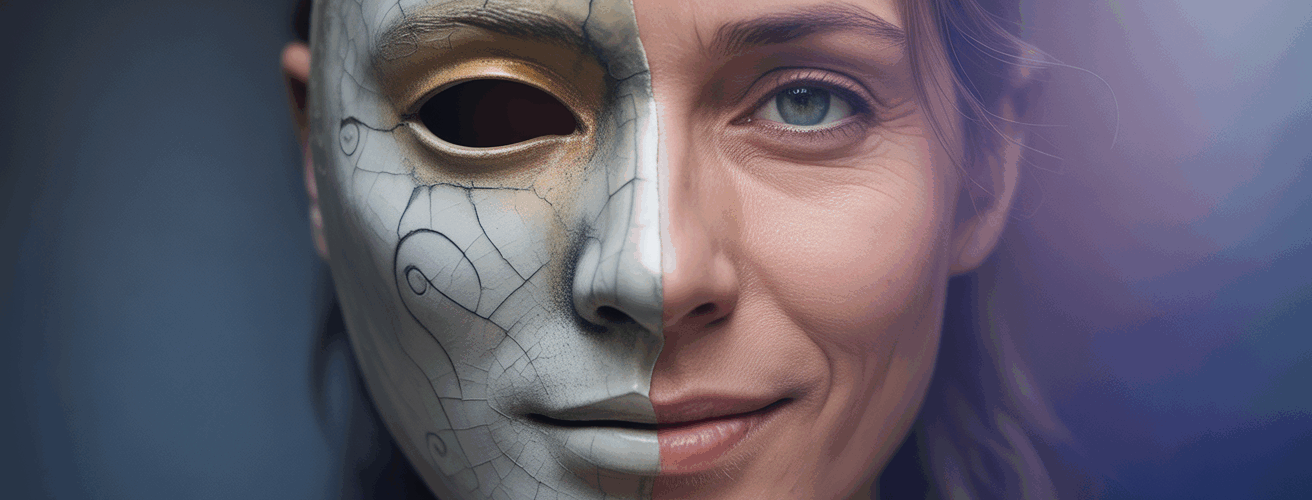
Many autistic adults, especially those missed in childhood, have spent years “masking” or “camouflaging” their traits to appear non-autistic. It is a learned way to fit in and avoid stigma or judgment. You can read more in our guide to autism masking in adults.
Masking can mean forcing eye contact, scripting conversations in advance, copying other people’s expressions, or suppressing self-regulating behaviors like stimming. It takes a lot of physical and mental energy. In interview and survey studies, autistic adults describe masking as exhausting, and higher camouflaging scores are linked with more anxiety, depression and burnout (Hull et al., 2017; Cook et al., 2021). These studies show an association, not proof that masking alone causes these problems.
“Unmasking,” or slowly dropping some of these learned behaviors in safe places, can raise big questions about identity, relationships and routines. For many people, self-identification is the first step in that process.
The Science of Self-Screening: What the Tools Can and Can’t Tell You
Only a qualified clinician can make a formal diagnosis. Several research-based self-report questionnaires can help you put words to possible autistic traits. They were developed and tested in published studies, but they are screening tools, not tests that confirm autism.
| Tool | What it measures | Limits |
| Autism Spectrum Quotient (AQ-50) | A 50-item questionnaire on autistic traits in adults with average or higher intelligence (Baron-Cohen et al., 2001). A score of 32 or more is the usual research cut-off. | In a UK clinic study, many adults who scored below the cut-off were still diagnosed autistic, so a low score does not rule autism out (Ashwood et al., 2016). |
| Ritvo Autism Asperger Diagnostic Scale-Revised (RAADS-R) | An 80-item questionnaire built to help identify autistic adults who were missed in childhood (Ritvo et al., 2011). A total of 65 or more is the published threshold. | It was designed to be used with a clinician. Later clinical studies found many false positives, especially in people with anxiety or other conditions. |
| Camouflaging Autistic Traits Questionnaire (CAT-Q) | A 25-item questionnaire that measures camouflaging across three subscales: compensation, masking and assimilation (Hull et al., 2019). | It measures camouflaging, not autism itself, and it has no official diagnostic cut-off. |
A critical distinction: a high score on any of these tools is not a diagnosis. It means further evaluation may be worthwhile. A formal diagnosis needs a full assessment that includes a developmental history and direct observation or interview by a qualified professional.
If you have masked for most of your life, you may also score lower than you expect, even if you are autistic. Camouflaging can make it hard to report your own behavior accurately, because many of these strategies have become automatic.
The Journey Forward: Benefits, Barriers, and the Path to Formal Evaluation
Deciding whether to seek a formal diagnosis as an adult is a personal choice. Many late-diagnosed adults describe relief and a new way to understand their past: not as personal failure, but as a different neurotype. A formal diagnosis can also open access to specialized support, disability services, workplace or college accommodations, and legal protections that require official documentation.
There are real barriers, too. Adult assessments are often expensive and may involve long waiting lists, and some people worry about being dismissed by a clinician who holds outdated stereotypes. Others worry about how a diagnosis might affect them in specific situations, such as some jobs, insurance or custody matters. For these reasons, some people decide that self-identification is enough for now, especially if they already have a supportive community.
If you are leaning toward an assessment, our guides on how to get tested for autism as an adult and where to find adult autism testing explain who to see, what it costs and what to ask.
Thinking about an adult autism assessment?
Clinicians will ask about your childhood, daily challenges and concrete examples, and if you mask it is easy to go blank in the room. The printable Pre-Assessment Checklist helps you write down what you have noticed, gather records and prepare your questions before the appointment.
Get the Pre-Assessment Checklist (PDF)
Instant download from 101Autism.com. A preparation tool, not a diagnostic test.
Joining the Community: Where to Find Your People
Self-identification can help you connect with people who share similar experiences. Autistic adults are active on platforms such as Reddit, Instagram and TikTok, and many cities have autistic-led meetups or support groups. Seeing your own life reflected in someone else’s story can be very validating. As with any online space, be thoughtful about advice that claims a quiz or a video can tell you for certain whether you are autistic.
If you are struggling with your mental health or thinking about harming yourself, please reach out now. In the US, call or text 988 (Suicide & Crisis Lifeline). Elsewhere, contact your local emergency number or crisis line.
Frequently Asked Questions About Adult Autism Self-Identification
Can adults self-diagnose with autism?
Many adults self-identify as autistic, and this is widely accepted in the autistic community. It is not a medical diagnosis, but it can be a valid way to understand yourself and find community. Screening questionnaires like the AQ or RAADS-R can help you explore your traits, but they cannot confirm autism.
What are the most reliable autism screening tests for adults?
The most widely studied self-report tools are the Autism Spectrum Quotient (AQ-50 and AQ-10), the Ritvo Autism Asperger Diagnostic Scale-Revised (RAADS-R) and, for camouflaging, the CAT-Q. They were tested in research, but all of them miss some autistic people and flag some non-autistic people, so they are a starting point, not an answer.
Why were so many adults missed in childhood autism diagnoses?
Earlier diagnostic criteria were narrow and often based on stereotypes of young boys with obvious traits. Women, people without an intellectual disability, and people who learned to mask were often overlooked. Researchers have called these under-identified adults a “lost generation” (Lai & Baron-Cohen, 2015).
What is autism masking and how does it affect adults?
Masking (or camouflaging) means hiding autistic traits or copying non-autistic social behavior, such as forcing eye contact, scripting conversations or suppressing stimming. Autistic adults often describe it as exhausting, and studies link higher camouflaging with more anxiety, depression and burnout.
Should I pursue a formal autism diagnosis as an adult?
It depends on your goals and circumstances. A formal diagnosis can give access to accommodations, disability services and legal protections. It can also be expensive and slow to get. Some people find self-identification enough for personal understanding and community connection.
Can someone be autistic but not score high on screening tests?
Yes. This is especially common in people who have masked for many years, because camouflaging can make it hard to report your own behavior accurately. In one UK clinic study, many adults who scored below the AQ cut-off were still diagnosed autistic.
Where can I find community support after autism self-identification?
Online autistic communities are active on Reddit, Instagram, TikTok and Facebook groups. Local autistic-led groups, autism organizations and neurodiversity-affirming therapists can also help you connect with others.
What are the signs of autism in adults that were missed in childhood?
Common experiences include feeling different from peers, social exhaustion after gatherings, difficulty with changes to routine, intense interests, sensory sensitivities, executive function struggles and a history of masking. Many late-diagnosed adults also describe a long history of anxiety, depression or burnout before autism was considered.
Sources
Lai MC, Baron-Cohen S. Identifying the lost generation of adults with autism spectrum conditions. Lancet Psychiatry. 2015;2(11):1013-1027. doi:10.1016/S2215-0366(15)00277-1
Baron-Cohen S, et al. The Autism-Spectrum Quotient (AQ). J Autism Dev Disord. 2001;31(1):5-17.
Ashwood KL, et al. Predicting the diagnosis of autism in adults using the Autism-Spectrum Quotient (AQ) questionnaire. Psychol Med. 2016;46(12):2595-2604.
Ritvo RA, et al. The Ritvo Autism Asperger Diagnostic Scale-Revised (RAADS-R). J Autism Dev Disord. 2011;41(8):1076-1089.
Hull L, et al. “Putting on my best normal”: social camouflaging in adults with autism spectrum conditions. J Autism Dev Disord. 2017;47(8):2519-2534.
Hull L, et al. Development and validation of the Camouflaging Autistic Traits Questionnaire (CAT-Q). J Autism Dev Disord. 2019;49(3):819-833.
Cook J, Hull L, Crane L, Mandy W. Camouflaging in autism: a systematic review. Clin Psychol Rev. 2021;89:102080.
Are you on a journey of self-discovery? Share your experience in the comments below. What did you find most helpful in your search for answers?
Discover more from Living with Autism
Subscribe to get the latest posts sent to your email.



2 Responses
[…] On self-identifying as autistic and what that means:https://101autism.com/autism-self-diagnosis-adults/ […]
[…] you are weighing self-identification, read our page on autism self-diagnosis in adults for the pros and […]