Mattel Introduces the First Autistic Barbie Doll: What’s Included, Why It Matters, and How to Use It at Home
If you’ve ever wished your child could point to a toy and feel that tiny spark of “that’s me,” this one hits different.
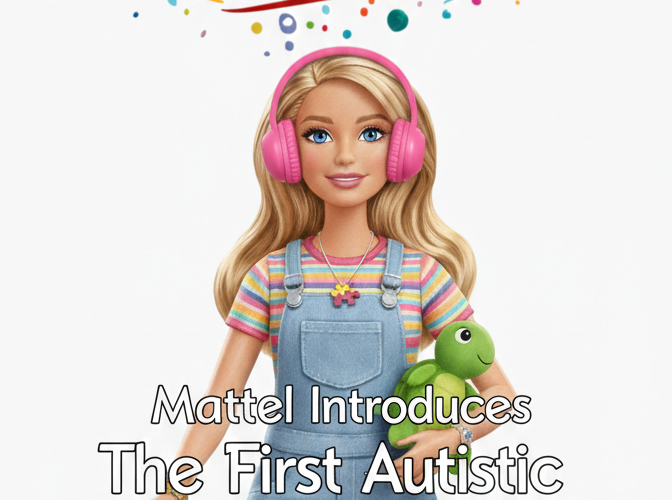
On January 12, 2026, Mattel released its first-ever autistic Barbie as part of the Barbie Fashionistas line, developed in partnership with the Autistic Self Advocacy Network (ASAN)—an autistic-led advocacy organization.
And yes: people are celebrating, debating, side-eyeing, and happy-crying all at once. Which honestly makes sense—because autism is a spectrum, and representation is never one-size-fits-all.
Here’s what we know, what’s actually in the box, and how families can turn this into something genuinely helpful (not just “a news moment”).
1) It wasn’t designed about autistic people. It was designed with autistic people.
Mattel says the doll was developed over 18+ months with guidance from ASAN. That matters, because “inclusion” can be performative when brands don’t involve the community they’re representing.
One line from Mattel’s announcement that nails the intent:
“Every child deserves to see themselves in Barbie.”
2) The design details are… surprisingly thoughtful
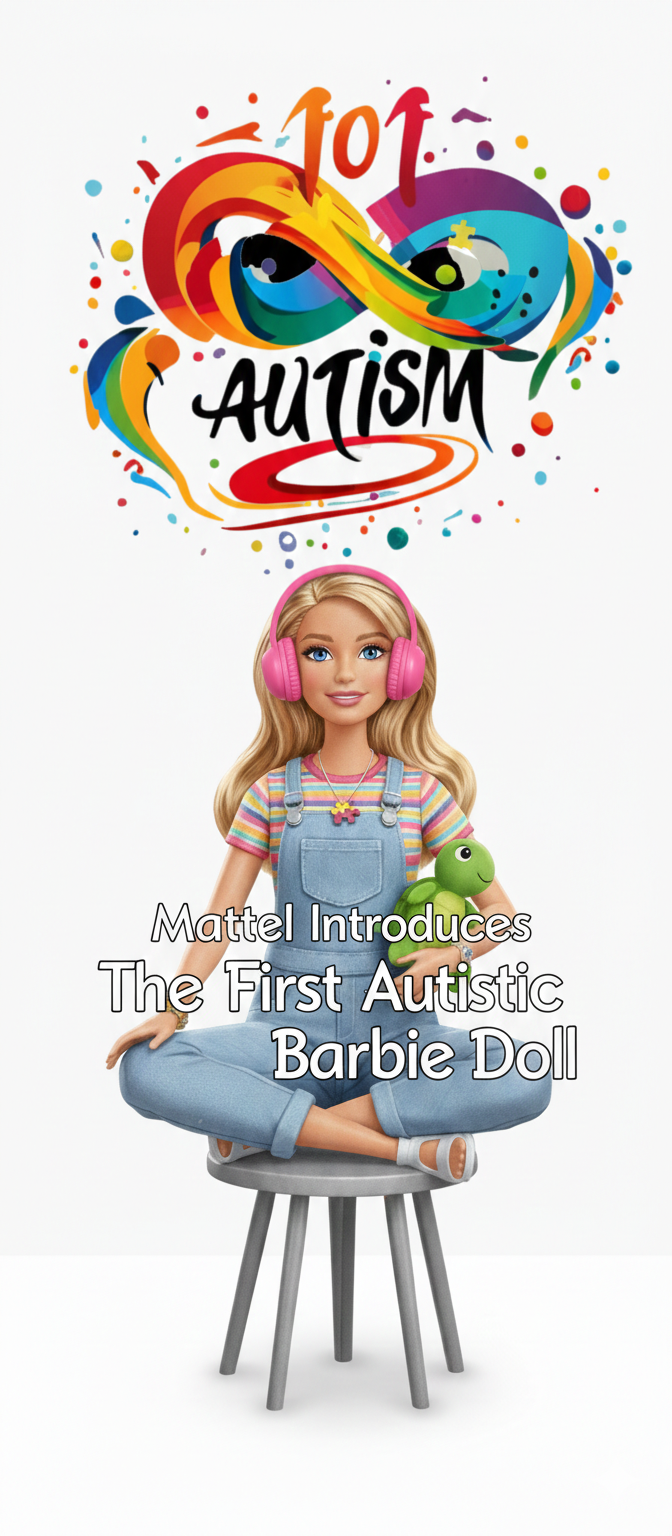
This isn’t just a label slapped on a standard doll. The autistic Barbie includes choices meant to reflect common autistic experiences (while still leaving room for individuality):
- Slightly averted gaze (since some autistic people avoid direct eye contact)
- Extra articulation at elbows/wrists to allow gestures like hand-flapping/stimming
- Sensory-friendly outfit (looser dress, flat shoes instead of heels)
The vibe is less “autism costume,” more “comfort + real-world supports.”
3) The accessories normalize supports (and that’s a big deal)
The doll comes with items many autistic kids recognize instantly:
- A fidget spinner
- Noise-reducing / noise-canceling style headphones
- A tablet showing AAC symbols (Augmentative and Alternative Communication)
For families who use AAC or sensory supports, seeing them reflected in mainstream toys can feel weirdly emotional—in a good way.
4) It’s also a quiet “education tool” for siblings and classmates
A lot of kids learn through play before they can explain anything with words. This doll can help make conversations feel less heavy and more natural, like:
- “Sometimes loud places hurt my ears, so I use headphones.”
- “Some people talk with a tablet—and that still counts as talking.”
- “Stimming can mean excited, stressed, focused… depends.”
That kind of casual normalization can reduce the “why are you like that?” moments at school and home.
5) Representation is powerful… but it can also bring up valid concerns
Some people are hyped. Some are cautious. Both can be true.
A common worry: Does one “autistic doll” accidentally imply autism has one look or one set of traits? Coverage in the UK highlighted this exact tension—celebration, plus reminders that neurodivergence is diverse and doesn’t present the same way for everyone.
A healthy way to frame it for kids:
“This is one autistic Barbie. There are a million ways to be autistic.”
If your child doesn’t relate to the accessories or features, that doesn’t make them “less autistic.” It just makes them… themselves.
6) Where to buy it + what it costs (right now)
At launch, it was reported as available through Mattel Shop and Target, and also via major retailers like Walmart and Amazon, with a suggested price around $11.87 (prices vary by retailer/country).
7) 9 practical ways families can use the autistic Barbie at home
Here are ideas that go beyond “put it on the shelf”:
- Social story practice (without the pressure): act out school drop-off, dentist visits, playground conflicts.
- Sensory mapping game: “What sounds feel too loud for Barbie today?”
- AAC normalization: let siblings “talk” using the tablet in pretend play.
- Transition rehearsals: bedtime routine, leaving the house, switching activities.
- Emotion detective: “Is Barbie stimming because excited, nervous, or focused?”
- Advocacy scripts: “Barbie needs a quiet break.” “Barbie uses headphones. That’s okay.”
- Friendship roleplay: practice how to invite someone to play without forcing eye contact.
- Safe space setup: make Barbie a mini calm corner (tiny blanket, “quiet sign,” small sensory item).
- Customization as empowerment: swap outfits, add more supports, remove accessories—teach that supports are optional tools, not a fixed identity.
Quick takeaway
This launch matters not because it “solves” representation—but because it opens a door: autistic kids can feel seen, and other kids can learn empathy through normal play.
The best part? You don’t need the doll to be “perfect” for it to be useful. You just need play to stay child-led, flexible, and shame-free.
FAQ
Is this the first autistic Barbie doll?
Yes. Mattel introduced its first autistic Barbie in January 2026 as part of the Fashionistas line, developed with ASAN.
What comes with the autistic Barbie?
Commonly reported accessories include headphones, a fidget spinner, and an AAC-style tablet, plus sensory-friendly clothing and added arm articulation.
Where can I buy it?
At launch, it was reported on Mattel’s shop and major retailers including Target, Walmart, and Amazon (availability varies by region).
Discover more from Living with Autism
Subscribe to get the latest posts sent to your email.