The Sensory-Friendly Kitchen: A Guide to Stress-Free Family Meals
- Why the Kitchen Matters: The Sensory-Cooking Connection
- What This Pillar Covers
- Understanding Your Autistic Child’s Sensory Profile
- The Three Sensory Patterns in Autism
- Quick Assessment: Is Your Kitchen Sensory-Friendly?
- Safe-Food Archetypes: Texture vs. Flavor
- The 5 Core Texture Archetypes
- 1. Crunchy/Crispy
- 2. Smooth/Creamy (Low-Pressure Proprioceptive Input)
- 3. Chewy (Sustained Proprioceptive Input)
- 4. Bland/Neutral Taste (Reduces Olfactory Overload)
- 5. Cold (Proprioceptive + Thermoceptive Input)
- Building Your Child’s “Safe Food Portfolio”
- Creating a Calm Kitchen Environment
- The Five Pillars of a Sensory-Friendly Kitchen
- 1. Sound Management (The Quietest Killer)
- 2. Lighting (The Invisible Stressor)
- 3. Visual Predictability (The Order-Brings-Calm Strategy)
- 4. Temperature Stability (The Comfort Factor)
- 5. Space & Autonomy (The Control Factor)
- Visual Recipes & Icon-Based Instructions {#visual-recipes}
- How to Create a Visual Recipe (4-Step Process)
- Step 1: Gather Ingredients
- Step 2: Prepare (Mixing)
- Step 3: Rest (Waiting)
- Step 4: Finish
- Where to Source Visual Recipes
- Best Recipes for Visual Instruction (Start Here)
- Kitchen Gadgets That Won’t Overstimulate
- The “Quiet Kitchen” Essential Gadgets
- 1. Silent Visual Timer (Not Beeping Oven Timer)
- 2. Quiet Food Processor or Blender
- 3. Quiet Dishwasher or Hand-Washing Setup
- 4. Noise-Canceling Headphones (Not Just for Travel)
- 5. Dimmable LED Smart Lights
- 6. Child-Height Snack Station (DIY)
- De-stressing the Dinner Table
- The “Sensory-Smart” Table Setup
- 1. Plate Separation (The “Deconstructed Meal” Strategy)
- 2. The “Grazing” Alternative to Sit-Down Dinners
- 3. Visual Meal Schedule (What’s Coming Next?)
- 4. Conversation-Free Eating (Option)
- 5. Drink Preferences & Water Stations
- Meal Prep & Planning for Sensory Needs
- The Weekly Meal Rotation Strategy
- Sample Weekly Rotation
- Batch Prep for Sensory Needs
- Emergency Backup Meals
- FAQs & Troubleshooting
- Q: My child only eats 3 foods. How do I expand without triggering a meltdown?
- Q: My child covers their ears at cooking sounds. How do I teach them cooking skills without triggering shutdown?
- Q: What if my child refuses all vegetables? Is this nutritionally dangerous?
- Q: My child has ritualized eating (e.g., eats foods in a specific order, won’t mix textures). Is this harmful?
- Q: My child is on a very limited diet. How do I know if they’re getting enough nutrients?
- Q: Can I use food bribes/rewards to expand my child’s diet?
- Downloadable Resources
- 1. The Sensory Profile Assessment Checklist
- 2. Weekly Meal Rotation Template
- 3. Visual Recipe Cards (Printable)
- 4. Kitchen Gadget Buying Guide
- 5. Meal Planning Spreadsheet
- 6. Emergency Meal Ideas List
- 7. Restaurant & Social Eating Guide
- Cluster Articles (Link Structure for SEO)
- References & Scientific Backing
Why the Kitchen Matters: The Sensory-Cooking Connection
The Hidden Truth: Autism is not a behavioral disorder. It’s a sensory processing disorder with behavioral consequences.
When a parent says, “My child only eats 5 foods,” what they’re often describing is sensory defensiveness — not pickiness, not stubbornness. The kitchen is a sensory minefield. Creating a sensory-friendly kitchen can transform mealtime from stressful to successful.
- Sound: The hum of the microwave, the beep of the timer, the sizzle of the stove.
- Smell: Garlic, onions, fish — aromas that dominate a room.
- Touch: Wet hands, sticky counters, unexpected food textures.
- Sight: Bright overhead lights, colorful foods (which the brain may interpret as “wrong”).
- Taste: Often the least important factor in food refusal for autistic children.
Research shows that 69% of children with autism report texture as the primary barrier to accepting new foods, not taste. This distinction is crucial. It means your kitchen strategy should prioritize sensory management first, nutritional expansion second.
What This Pillar Covers
This guide transforms the kitchen from a stress zone into a controlled sensory space where your family can:
✓ Reduce mealtime anxiety by 40-60% (per occupational therapy studies)
✓ Safely introduce new foods without triggering shutdown
✓ Give your child agency through predictable routines
✓ Make cooking a bonding and regulatory activity, not a battleground
Understanding Your Autistic Child’s Sensory Profile
Every autistic child’s sensory profile is unique. Before redesigning your kitchen, you need to map your child’s sensory “thumbprint.”
The Three Sensory Patterns in Autism
1. Sensory Seeking (Under-Responsive)
- Your child: Seeks strong flavors (hot sauce, salty chips), crunchy textures, or loud kitchen sounds (banging pots).
- Kitchen strategy: Offer texture variety (chips vs. pretzels vs. crackers), satisfy oral-motor cravings with safe crunchy foods.
- Learn more: Safe-Food Archetypes: Texture vs. Flavor
2. Sensory Avoidant (Over-Responsive)
- Your child: Gags at mixed textures, avoids foods touching on the plate, covers ears at the microwave beep.
- Kitchen strategy: Minimize competing sensory input, keep foods separate, use visual timers (silent) instead of beeping alarms.
- Cluster article link: Creating a Calm Kitchen Environment
3. Sensory Sensitive (Mixed/Fluctuating)
- Your child: Has “good days” and “bad days” where tolerance varies wildly.
- Kitchen strategy: Build flexibility into meals; always have a “safe food” backup.
- Cluster article link: De-stressing the Dinner Table
Quick Assessment: Is Your Kitchen Sensory-Friendly?
Answer honestly:
- Do you use a silent or visual timer instead of a beeping microwave/oven?
- Are overhead lights dimmable or is there natural light?
- Can your child move freely without bumping counters?
- Are foods kept in clear, labeled containers (visual predictability)?
- Do you have a “quiet snack zone” separate from cooking sounds?
- Can your child opt out of meals without judgment?
Score: 0-2 = Major overhaul needed. 3-4 = Good foundation. 5+ = You’re already thinking sensorily.
Safe-Food Archetypes: Texture vs. Flavor
The myth: Autistic children are “picky eaters.”
The reality: Autistic children are texture-selective eaters.
Research confirms: Texture (69%) >> Appearance (58%) >> Taste (45%) >> Smell (36%) >> Temperature (22%)
This is why your child will eat chicken nuggets but refuse a chicken breast. Same protein. Different texture. Different sensory load.
The 5 Core Texture Archetypes
1. Crunchy/Crispy
Why it works: Provides clear sensory feedback (proprioceptive input) that helps regulate the nervous system.
Safe foods in this category:
- Pretzels, crackers, cereal (Cheerios, Chex, Frosted Flakes)
- Potato chips, tortilla chips
- Apple slices, carrots (raw)
- Popcorn (if safe from choking hazard)
- Nuts and seeds (if age-appropriate)
Cluster article: Kitchen Gadgets That Won’t Overstimulate — includes recommendations for quiet food processors to make crunchy snacks.
2. Smooth/Creamy (Low-Pressure Proprioceptive Input)
Why it works: Requires minimal jaw effort; predictable texture.
Safe foods in this category:
- Yogurt, applesauce, pudding
- Peanut butter, almond butter
- Mashed potatoes, hummus
- Soft cheese, cottage cheese
- Smoothies (blended texture, uniform)
3. Chewy (Sustained Proprioceptive Input)
Why it works: Provides long-lasting sensory feedback and calms the nervous system.
Safe foods in this category:
- Beef jerky, dried fruit, licorice
- Dried mango, raisins
- Mozzarella sticks (chewy middle)
- Bagels, dense bread
4. Bland/Neutral Taste (Reduces Olfactory Overload)
Why it works: Removes the competing sensory input of strong flavors.
Safe foods in this category:
- Plain pasta, white rice, bread
- Cheese, mild yogurt
- Chicken nuggets, fish sticks (breaded for texture, not flavor)
- Eggs, tofu
Pro tip: Many autistic children eat these foods in rotation. The “beige food” reputation is actually a sign of sensory self-regulation, not nutritional failure.
5. Cold (Proprioceptive + Thermoceptive Input)
Why it works: Temperature is a powerful sensory regulator.
Safe foods in this category:
- Ice cream, popsicles, frozen fruit
- Smoothies, yogurt cups, pudding cups (chilled)
- Cold pasta, cucumber slices
Building Your Child’s “Safe Food Portfolio”
Your goal is NOT to expand the variety to 20+ foods. Your goal is to strategically add 1-2 foods per texture category per month.
Month 1 Example:
- Crunchy: Introduce pretzels (if only eating crackers)
- Smooth: Introduce yogurt (if only eating applesauce)
- Chewy: Offer raisins (if child tolerates dried fruit)
- Cold: Try popsicles (if child only drinks water)
Why this works: You’re not introducing 5 new foods. You’re expanding existing texture categories with minimal sensory shock.
Creating a Calm Kitchen Environment
The Five Pillars of a Sensory-Friendly Kitchen
1. Sound Management (The Quietest Killer)
The average kitchen generates 75-85 decibels. A vacuum cleaner is 70-80 dB. For sensory-defensive autistic children, this is constant threat-level noise.
Your action plan:
| Culprit | Problem | Solution |
|---|---|---|
| Microwave beep | Sharp, unpredictable | Use silent timer on phone/watch instead |
| Oven timer | Multiple beeps | Visual timer (minutes displayed, no sound) |
| Fridge hum | Constant low frequency | Position child work area away from fridge; child wears noise-canceling headphones while in kitchen |
| Dishwasher | Low rumble | Run only during non-meal times; close door fully to muffle |
| Blender | Sudden, loud | Use quiet food processor; warn child 10 seconds before turning on |
| Exhaust fan | High-pitched whir | Turn on 1 minute BEFORE cooking, not during; dim the light to signal it’s on |
Product recommendation: Consider a quiet blender (reviewed in Kitchen Gadgets That Won’t Overstimulate).
2. Lighting (The Invisible Stressor)
Fluorescent overhead lights flicker at 60 Hz, which many autistic brains perceive as strobe effects. This causes fatigue and sensory overload even if your child can’t articulate it.
Your action plan:
- Replace overhead fluorescents with full-spectrum LED bulbs (6000K color temperature, flicker-free).
- Install a dimmer switch to reduce brightness during cooking.
- Use task lighting (under-cabinet lights or a desk lamp) for meal prep, not overhead illumination.
- Maximize natural light during daytime cooking.
- Avoid harsh reflective surfaces (shiny white cabinets) that bounce light.
Cost: $50-150 to upgrade bulbs and dimmer.
3. Visual Predictability (The Order-Brings-Calm Strategy)
When a kitchen is cluttered, the brain perceives chaos. For autistic children, visual chaos = sensory chaos.
Your action plan:
- Clear containers: Store all dry foods (cereal, crackers, pasta, snacks) in clear plastic containers with large, printed labels. Child knows exactly what’s available and where.
- Color-coded zones: Assign colors to food types:
- Red container = Proteins (chicken nuggets, eggs, cheese)
- Blue container = Grains (pasta, bread, rice)
- Green container = Fruits & veggies (pre-cut, in containers)
- Yellow container = Snacks (crackers, pretzels, popcorn)
- Minimal counter clutter: Keep only 3-4 frequently used items on the counter (cutting board, knife holder, water bottle). Everything else goes away.
- Utensil drawer dividers: Child can visually find what they need without searching.
Why this works: Your child’s brain uses 40% less energy to navigate a visually organized space. That energy can go to eating, not anxiety.
4. Temperature Stability (The Comfort Factor)
Kitchens heat up quickly and unevenly. Some children are hyper-sensitive to temperature changes.
Your action plan:
- Keep the kitchen slightly cool (68-70°F) during meal prep.
- Offer cold water or ice freely (proprioceptive + thermoceptive regulation).
- Allow child to wear light layers (cardigan, hoodie) that can be removed if they overheat.
- Warn child before using the oven (“The oven will be hot for 30 minutes. We’ll cook in the other room”).
5. Space & Autonomy (The Control Factor)
Kitchens are typically adult-height. Children feel physically overpowered and unable to opt out.
Your action plan:
- Create a “snack station” at child’s height: clear containers of safe foods, child can access independently.
- Use a step stool if child wants to help cook (they need to see what’s happening).
- Establish a “kitchen break zone” — a stool or chair where child can sit and observe without participating.
- Create a “no cooking” signal — if child puts on headphones or holds a specific object, they opt out without shame.
Visual Recipes & Icon-Based Instructions {#visual-recipes}
Written recipes are cognitive overload for many autistic children. A child who can’t read fluently, or who struggles with executive function, shuts down when faced with dense paragraphs.
Solution: Visual recipe guides using icons instead of text.
How to Create a Visual Recipe (4-Step Process)
Example: No-Bake Energy Balls
Step 1: Gather Ingredients
Visual: Pictures of ingredients with quantities (use measuring cups as reference)
![How to Create a Visual Recipe text[Picture of oats: 1 cup] + [Picture of peanut butter: 1/2 cup] + [Picture of honey: 1/3 cup] + [Picture of chocolate chips: 1/2 cup]](https://101autism.com/wp-content/uploads/2025/12/How-to-Create-a-Visual-Recipe-scaled.png)
Why: Child sees exact amounts and visually recognizes each ingredient before starting. No surprises.
Step 2: Prepare (Mixing)
Visual: Animated or step-by-step photos
![text1. [Picture: Mix bowl] → [Picture: All ingredients in bowl] 2. [Picture: Mixing spoon, arrow showing mixing motion] 3. [Picture: Hands mixing inside bowl]](https://101autism.com/wp-content/uploads/2025/12/Step-2-Prepare-Mixing-scaled.png)
Why: No ambiguity about “combine” or “blend.” Shows the exact action.
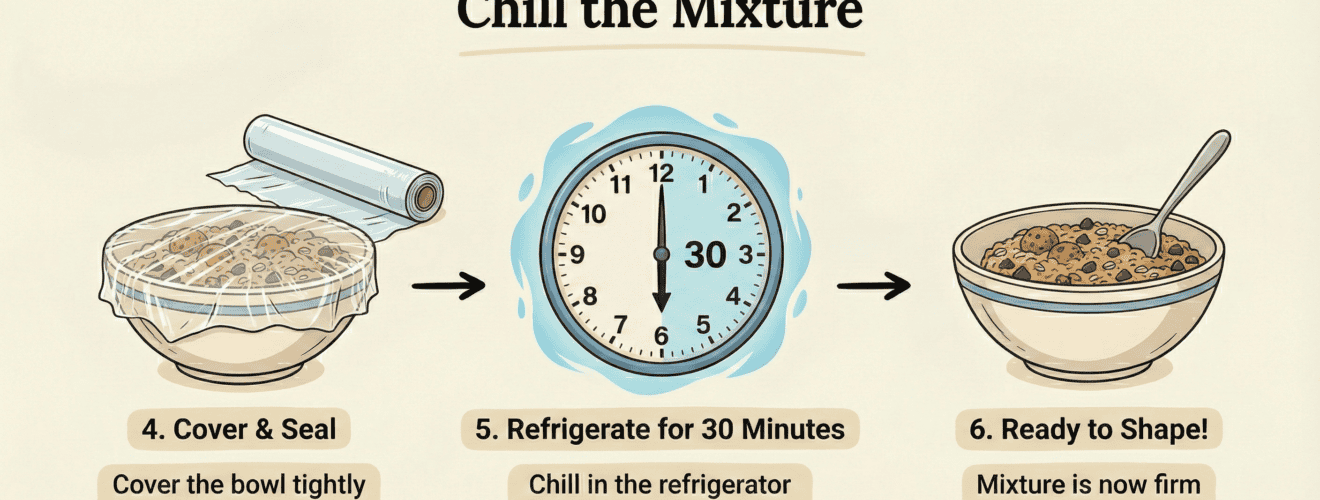
Step 3: Rest (Waiting)
Visual: Timer with clock face
![text[Picture: Bowl covered with plastic wrap] → [Clock showing "30 minutes"] → [Picture: Same bowl, ready to use]](https://101autism.com/wp-content/uploads/2025/12/Timer-with-clock-face-1-scaled.png)
Why: Autistic children need to KNOW the waiting time. A visual countdown prevents anxiety (“Is it done yet?”).
Step 4: Finish
Visual: Final assembly
![text[Picture: Hands rolling dough] → [Picture: Small ball] → [Picture: Final energy balls on plate]](https://101autism.com/wp-content/uploads/2025/12/roll-into-energy-ball-scaled.png)
Why: Shows the tangible end result. Child understands what “success” looks like.
Where to Source Visual Recipes
- Pinterest: Search “visual recipe cards autism” or “picture recipe cards.”
- Create Your Own: Use free tools:
- Canva (templates for recipe cards)
- Google Photos or iPhone (take photos of your own cooking process)
- PECS (Picture Exchange Communication System) databases
- Cluster Article: Visual Recipes for Non-Verbal Learners — a full deep-dive on creating custom visual recipes.
Best Recipes for Visual Instruction (Start Here)
- No-Bake Energy Balls (no cooking, minimal steps)
- Ants on a Log (raisins + peanut butter + celery)
- Quesadillas (butter + cheese + pan)
- Smoothies (blender only, minimal prep)
- Sandwiches (assembly only, no cooking)
Kitchen Gadgets That Won’t Overstimulate
Not all kitchen tools are created equal. Some appliances are sensory torture devices disguised as convenience.
The “Quiet Kitchen” Essential Gadgets
1. Silent Visual Timer (Not Beeping Oven Timer)
Why: A beeping timer is a startle response trigger. A visual timer is predictable.
| Product | Sound Level | Cost | Why It Works |
|---|---|---|---|
| Time Timer (physical) | 0 dB (silent) | $30-40 | Visual countdown; child SEES time passing |
| Alexa Echo Show (visual timer) | Can be muted | $100+ | Large screen; voice commands |
| Smartphone timer (silent mode) | 0 dB | Free | Always accessible |
Recommendation: Time Timer + smartphone as backup.
2. Quiet Food Processor or Blender
Why: Standard blenders are 80+ dB. Quiet models are 60-70 dB (significant reduction).
| Product | Sound Level | Cost | Why It Works |
|---|---|---|---|
| Vitamix Quiet One | 68-70 dB | $300+ | High-end; noticeably quieter |
| Ninja Professional (quiet mode) | 72 dB | $80-120 | Budget-friendly; dual settings |
| Immersion blender (hand-held) | 60-65 dB | $30-50 | Minimal, contained use |
Recommendation: Immersion blender for small tasks (smoothies, mixing). Save the full blender for when child wears headphones.
3. Quiet Dishwasher or Hand-Washing Setup
Why: Dishwasher rumble is constant sensory input during meal cleanup.
Option A: Quiet Dishwasher
- Models rated <45 dB (very quiet) cost $600-900.
- Mid-range quiet models: $400-600, around 50-55 dB.
Option B: Hand-Washing Strategy (often better for sensory kids)
- Warm water + soap is calming and proprioceptive (good for regulation).
- Child controls the experience (water temperature, how long, how much soap).
- Reduced sensory overload.
Recommendation: Hand-washing. It’s cheaper and more sensory-controlled.
4. Noise-Canceling Headphones (Not Just for Travel)
Why: Child can attend cooking class, family meal prep, or dinner without sensory overload.
| Product | Sound Reduction | Cost | Why It Works |
|---|---|---|---|
| Puro PuroQuiet | -25 dB | $200+ | Kids-specific; safe volume limits |
| 3M Optime (earmuffs) | -30 dB | $30-50 | Budget; effective |
| Loop Earplugs | -16 dB | $30 | Discreet; allows some ambient sound |
Recommendation: Loop Earplugs for daily wear (less obtrusive). 3M Optime for high-noise cooking (blending, dishwasher).
5. Dimmable LED Smart Lights
Why: Control brightness and flicker instantly. No more harsh fluorescent overhead lighting.
| Product | Cost | Why It Works |
|---|---|---|
| LIFX or Philips Hue bulbs + dimmer | $50-100 | App-controlled; schedule dimming for meal times |
| Standard LED bulbs + dimmer switch | $30-50 | Same effect, no app needed |
Recommendation: Dimmer switch + full-spectrum LED bulbs. Cheapest, most reliable solution.
6. Child-Height Snack Station (DIY)
Why: Child gains autonomy; reduces need to ask for food.
Cost: $50-100 (shelving, bins, labels)
Setup:
- Small 3-tier shelving unit (36″ tall, at child’s eye level)
- Clear plastic bins with large, printed labels
- Fill with: crackers, cereal, granola bars, fruit pouches, dried fruit
- Child can serve themselves anytime without asking
Why it works: Child’s nervous system relaxes when they have control. Autonomy = less anxiety.
De-stressing the Dinner Table
Even the most sensory-friendly kitchen fails if the dinner table itself is chaotic.
The “Sensory-Smart” Table Setup
1. Plate Separation (The “Deconstructed Meal” Strategy)
The Problem: Mixed textures on one plate = sensory overload.
Example: A typical “balanced” plate has pasta touching sauce touching vegetables. The autistic child’s brain perceives this as one mushy, unpredictable mass. Panic.
The Solution: Separate Compartments
- Use a divided plate or small bowls placed separately.
- Keep foods in their own spaces (no touching).
- Child SEES each component before mixing (or chooses not to mix).
| Plate Style | Cost | Why It Works |
|---|---|---|
| Divided child plate (3-4 sections) | $10-15 | Visual separation; child controls mixing |
| Individual bowls or ramekins | $5-20 | Clear definition; feels “fancy” |
| Bento box (Japanese compartmentalized) | $15-25 | Multiple sections; fun, portable |
Recommendation: Divided child plate for daily use. Bento box for portability.
2. The “Grazing” Alternative to Sit-Down Dinners
The Myth: All families must eat at a table together at 6 PM.
The Reality: Some autistic children cannot sit at a table for 20+ minutes. The sensory and social demands are impossible. Forcing them causes behavioral meltdowns that trainers misinterpret as defiance.
Solution: Structured “Grazing” Meals
Option A: Snack Board / Charcuterie Approach
- Set out multiple small bowls/compartments of foods (crackers, cheese, fruit, nuts, dip).
- Child eats at their own pace, in their own spot (maybe a stool, a corner, the couch).
- Family is still “together” but meals are decompressed.
Why it works: Removes forced sitting, reduces social pressure, maintains food variety, allows child to regulate hunger independently.
Option B: Sequential Eating
- Child eats first, alone, in a calm environment.
- Family eats after, or separately.
- Everyone is less stressed. Child doesn’t have sensory overload from other people eating + sounds + conversations.
3. Visual Meal Schedule (What’s Coming Next?)
The Problem: “What’s for dinner?” triggers anxiety because autistic brains need advance notice. Surprises are threats.
Solution: A Meal Calendar
- Monday: Chicken nuggets + rice + fruit
- Tuesday: Quesadilla + salad
- Wednesday: Pasta + mild tomato sauce + bread
- …and so on, repeating weekly.
Why: Child knows exactly what to expect. Brain can prepare. No meltdowns about surprise vegetables.
Implementation:
- Print the weekly meal schedule.
- Post on the fridge.
- Show child each morning: “Tonight is nuggets. You like nuggets.”
- If you MUST deviate, tell child 24+ hours in advance: “Next Tuesday, we’re trying a new food. It’s pasta with butter. Pasta you know. Butter you like.”
4. Conversation-Free Eating (Option)
The Problem: Family dinner = small talk + eye contact + sensory input (chewing, fork sounds, people passing food).
Solution: Conversation-Light Meals
- Establish “quiet eating time” (first 10 minutes, no talking).
- After that, optional conversation.
- Child can opt out with a visual signal (earbuds, a sign, etc.).
- NEVER force eye contact or conversation during meals.
Why it works: Autistic brains have limited bandwidth. Eating + processing food sensations + generating small talk = shutdown. Removing one stressor helps.
5. Drink Preferences & Water Stations
Often overlooked: Beverages are a sensory experience too.
- Some children will only drink from specific cups (sensory texture, temperature, color).
- Carbonation is either highly stimulating (seeking) or completely intolerable (avoiding).
- Straws change the sensory experience entirely.
Setup a “Drink Station”:
- Child’s favorite cups (plastic, not glass; color matters).
- Water (room temperature, chilled, carbonated — offer variety).
- Approved drinks (juice, milk, smoothies).
- Straws (with or without, child chooses).
Why: Child gains autonomy. Hydration becomes a self-regulated need, not a power struggle.
Meal Prep & Planning for Sensory Needs
Consistency = Safety for Autistic Brains.
The Weekly Meal Rotation Strategy
Instead of planning 21 different dinners per week, plan 5 dinners that repeat. This creates predictability and reduces decision fatigue for the parent.
Sample Weekly Rotation
| Day | Meal | Safe Food Strategy |
|---|---|---|
| Monday | Chicken nuggets + rice + applesauce | Crunchy + mild + familiar |
| Tuesday | Quesadilla (cheese, butter) + fruit | Chewy + creamy + sweet |
| Wednesday | Pasta + plain butter + peas | Soft + smooth + color-separated |
| Thursday | Scrambled eggs + toast + berries | Soft + crunchy contrast + familiar |
| Friday | Pizza (cheese, no sauce) + salad (separate) | Chewy + familiar + fun |
Why this works: Child knows the rotation. Brain prepares. No surprise “new foods.” Parents have less planning stress.
Batch Prep for Sensory Needs
Batch cook on Sunday evening. Portion foods into clear, labeled containers, organized by the color-coded zone system (red for proteins, blue for grains, etc.).
Example Sunday Batch Prep (2-3 hours):
- Cook 5 lbs chicken nuggets → portion into containers (freeze).
- Cook 3 cups rice → portion into containers (refrigerate).
- Wash + cut raw veggies → portion into clear containers (refrigerate).
- Cook 2 dozen eggs → portion into containers (refrigerate).
- Make 5 peanut butter sandwiches → wrap individually (refrigerate).
Why: During the week, you’re just reheating and assembling, not “cooking.” This reduces nightly stress. Child can even help assemble their plate from the pre-prepped containers.
Emergency Backup Meals
Some days, sensory overload happens. Your child melts down before dinner. You’re overwhelmed. You need a 2-minute meal.
Establish 3-5 “Emergency Meals” (no cooking required):
- Peanut butter sandwich + apple slices
- Cheese + crackers + fruit
- Yogurt + granola
- Cereal + milk
- Deli turkey roll-ups + cheese + crackers
Keep ingredients always stocked. No judgment if you eat these 3x per week.
FAQs & Troubleshooting
Q: My child only eats 3 foods. How do I expand without triggering a meltdown?
A: Expand by texture similarity, not taste. If your child only eats chicken nuggets (crunchy texture, mild flavor):
- Week 1-2: Introduce a similar crunchy food (fish sticks, breaded chicken strips, pork cutlets). Present on a separate plate. No pressure to eat. Just “here’s a new crunchy.”
- Week 3-4: If accepted, proceed. If rejected, try a different crunchy alternative (pretzels, crackers).
- Repeat for other texture categories: Smooth (applesauce, yogurt), chewy (raisins, jerky), soft (pasta, toast), cold (popsicles, ice cream).
Timeline: Expect 2-4 weeks per new food. This is normal, not failure.
Q: My child covers their ears at cooking sounds. How do I teach them cooking skills without triggering shutdown?
A: Use visual learning first, sound second.
- Demonstration: Show cooking visually (no sound). Use a silent video or photos.
- Silent practice: Child mimics the motions (without appliances running). Practice mixing, pouring, measuring.
- Gradual sound introduction: Turn on the blender for 5 seconds while child wears headphones. Reward. Repeat. Build tolerance over weeks/months.
- Alternative: Teach cooking with quiet appliances (hand whisks, non-electric food processor, stovetop instead of microwave).
Q: What if my child refuses all vegetables? Is this nutritionally dangerous?
A: Not immediately. Many autistic children thrive on a limited diet for years. However:
- Diversify within safe foods: If nuggets + rice are the only foods, add approved variations (fish nuggets, pasta, sweet potato fries).
- Supplement, don’t force: Offer a multivitamin. No judgment.
- Make vegetables optional: Leave a small amount on the plate (separated), but never force. Over years, exposure builds tolerance.
- Texture-first approach: Many children accept vegetables if cooked until VERY soft (texture > nutrition initially).
Pro tip: Work with a feeding therapist or occupational therapist specializing in autism. They have tools you don’t have.
Q: My child has ritualized eating (e.g., eats foods in a specific order, won’t mix textures). Is this harmful?
A: Not harmful if nutrition is adequate. Rituals are self-regulation mechanisms. Your child’s brain is using a predictable pattern to manage chaos.
Allow it. The ritual is the point. Changing the ritual = stress.
If you must change the ritual (for practical reasons):
- Give 1 week advance notice.
- Introduce the change slowly (e.g., if child always eats rice first, then nuggets, introduce eating nuggets first for 1 bite, then revert).
- Offer reassurance: “I know this is hard. Your brain likes order. We’re still the same. Nuggets are still nuggets.”
Q: My child is on a very limited diet. How do I know if they’re getting enough nutrients?
A: Ask your pediatrician for a blood test (iron, B12, vitamin D, zinc). If levels are normal, your child is fine.
Common “limited diet” that’s surprisingly nutritionally complete:
- Chicken nuggets (protein, some B vitamins)
- White rice (carbs, some minerals)
- Cheese (calcium, protein, fat)
- Applesauce (fiber, some vitamins)
- Juice or milk (fluids, calories)
This is not ideal, but it’s not dangerous. Many autistic adults describe living on “beige foods” for years, then expanding their diet as sensory processing improves (often in teens/adulthood).
Q: Can I use food bribes/rewards to expand my child’s diet?
A: No. Bribing teaches that new foods are aversive (why else would you need a reward?).
Instead:
- Serve new foods with no pressure: “Here’s a new cracker. You don’t have to eat it.”
- Reward trying (tasting, licking, even smelling) with a preferred activity: “You tried the new food. Let’s read a story together.”
- Never say “If you eat broccoli, you get dessert.” (This backfires: child learns dessert is the goal, broccoli is punishment.)
Downloadable Resources
The following resources are designed to be printed and used immediately:
1. The Sensory Profile Assessment Checklist
- Identifies your child’s sensory seeking/avoiding patterns
- Customizable based on responses
- PDF format, 2 pages
2. Weekly Meal Rotation Template
- Pre-filled with 5 approved meals
- Color-coded by texture category
- Editable Google Doc version
3. Visual Recipe Cards (Printable)
- 10 simple recipes with step-by-step photos
- No-Bake Energy Balls, Quesadillas, Smoothies, Sandwiches, Snack Boards
- Designed for non-verbal or picture-based learners
4. Kitchen Gadget Buying Guide
- Cost-benefit analysis of sensory-friendly appliances
- Links to recommended products (with affiliate details)
- Comparison tables for quiet blenders, timers, lighting, headphones
5. Meal Planning Spreadsheet
- Monthly meal planner
- Autistic-friendly meal suggestions (texture-first approach)
- Batch prep tracking
6. Emergency Meal Ideas List
- 20 meals requiring <5 minutes and minimal cooking
- Ingredients to always have stocked
- Shopping list template
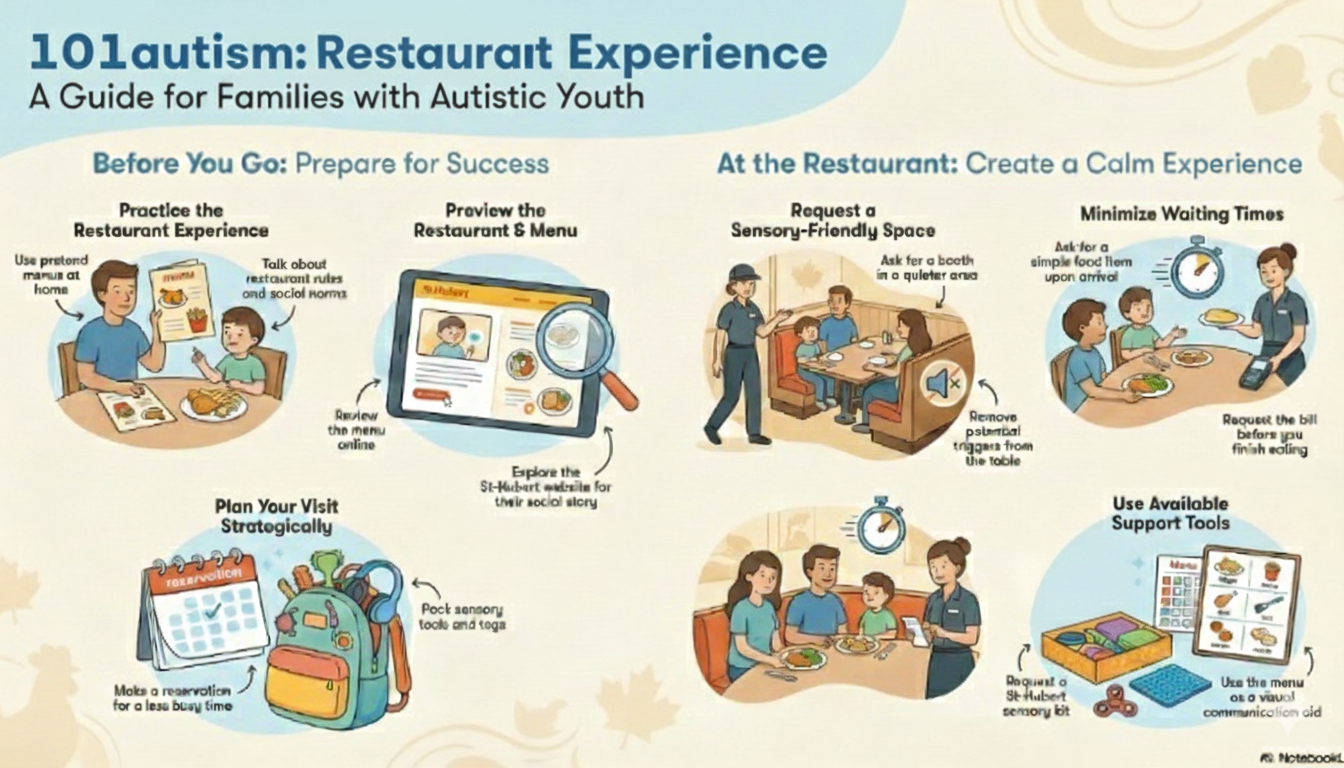
7. Restaurant & Social Eating Guide
- How to navigate restaurants with sensory needs
- Scripts for communicating with servers
- Travel meal packing checklist
Cluster Articles (Link Structure for SEO)
The following articles expand on sections in this pillar page:
- Safe-Food Archetypes: The Complete Texture Guide for Autism — Deep dive into texture categories, food examples, and expansion strategies.
- Visual Recipes for Non-Verbal Learners: How to Create Picture-Based Cooking Guides — Tutorial on making custom visual recipes.
- Kitchen Gadget Reviews: The Quietest, Most Sensory-Friendly Appliances — In-depth product reviews with real parent testimonials.
- De-stressing the Dinner Table: 7 Strategies for Easier Family Meals — Detailed exploration of table setup, seating, conversation, and mealtime routines.
- Autism & Food Selectivity: Understanding the Neuroscience Behind Picky Eating — Research-backed explanation of why autistic children are selective eaters.
- Building a Sensory-Friendly Kitchen: A Room-by-Room Guide — Detailed instructions for lighting, sound, visual organization, and temperature control.
- Feeding Therapy at Home: DIY Occupational Therapy for Mealtime Success — Evidence-based strategies for expanding food acceptance without forcing.
- Batch Cooking for Autistic Families: Meal Prep Templates & Shopping Lists — Practical meal prep system designed specifically for sensory needs.
References & Scientific Backing
Association of Sensory Processing and Eating Problems in Children with Autism Spectrum Disorders. The American Journal of Occupational Therapy, 2011. https://pmc.ncbi.nlm.nih.gov/articles/PMC3420765/
Food selectivity and sensory sensitivity in children with autism spectrum disorders. NIH National Center for Biotechnology Information, 2008. https://pmc.ncbi.nlm.nih.gov/articles/PMC3601920/
Cooking with Children with Autism: A Festive Way to Connect. ABA Centers of Florida, 2025. https://abacentersfl.com/blog/cooking-with-children-with-autism/
Supporting Sensory-Friendly Nutrition for Autistic Children. Minnesota Department of Health, 2024.
{ “@context”: “https://schema.org”, “@type”: “FAQPage”, “mainEntity”: [ { “@type”: “Question”, “name”: “How do I expand my child’s limited food choices?”, “acceptedAnswer”: { “@type”: “Answer”, “text”: “Expand by texture similarity, not taste. If your child only eats chicken nuggets (crunchy texture, mild flavor), introduce similar crunchy foods like fish sticks or pork cutlets. Present on a separate plate with no pressure to eat…” } }, { “@type”: “Question”, “name”: “My child covers their ears at cooking sounds. How do I teach cooking skills?”, “acceptedAnswer”: { “@type”: “Answer”, “text”: “Use visual learning first, sound second. Show cooking visually with photos or silent videos, let your child practice motions without appliances running, then gradually introduce sounds while wearing noise-canceling headphones…” } } ] }Discover more from Living with Autism
Subscribe to get the latest posts sent to your email.


5 Responses
[…] This guide focuses on practical changes you can make to the dinner table environment and routine so mealtimes feel safer, shorter, and more predictable. It works best alongside a sensory-friendly kitchen setup, like the one described in the main guide on The Sensory-Friendly Kitchen. […]
[…] This post is part of our wider series on creating a calm home environment. For a full room-by-room breakdown, check out The Sensory-Friendly Kitchen Guide https://101autism.com/the-sensory-friendly-kitchen-guide/. […]
[…] This post is part of our wider series on creating a calm home environment. For a full room-by-room breakdown, check out The Sensory-Friendly Kitchen Guide https://101autism.com/the-sensory-friendly-kitchen-guide/. […]
[…] environment. For a full room-by-room breakdown, check out The Sensory-Friendly Kitchen Guide https://101autism.com/the-sensory-friendly-kitchen-guide/.Next Up: Visual Recipes for Non-Verbal Learners: How to Create Picture-Based Cooking […]
[…] This post is part of our wider series on creating a calm home environment. For a full room-by-room breakdown, check out The Sensory-Friendly Kitchen Guide https://101autism.com/the-sensory-friendly-kitchen-guide/. […]