Creating a Calm Kitchen Environment: A Sensory-First Guide for Autistic Families
- TL;DR: Quick Wins for a Calmer Kitchen
- Creating a Calm Kitchen Environment: A Sensory-First Guide for Autistic Families
- Sound: Taming the Noise
- Light: From Harsh to Gentle
- Visual Calm: Organising What the Eyes See
- Smell and Temperature: Hidden Triggers
- Safety and Clear Boundaries
- A Nearby Sensory Break Space
- FAQ: Calm Kitchen & Autistic Children
- References
TL;DR: Quick Wins for a Calmer Kitchen
- Lower noise by using only one loud appliance at a time, adding felt pads to chairs, and keeping headphones available.
- Soften light with warm LED bulbs, dimmers, and under‑cabinet or task lighting instead of harsh overhead lights.
- Reduce visual clutter using clear containers, simple labels, and mostly clear countertops.
- Use clear visual safety boundaries like a red tape “no-go” zone near the stove and a dedicated “yes drawer” for safe items.
- Create a nearby sensory break corner so your child can step away before feeling overwhelmed.
Creating a Calm Kitchen Environment: A Sensory-First Guide for Autistic Families
Many autistic children find the kitchen overwhelming because it combines loud sounds, bright lights, strong smells, and social demands all in one space. What can look like “bad behavior” at 5 PM is often a nervous system pushed beyond its limits. Small environmental changes can make the kitchen feel safer and reduce pre‑dinner meltdowns.
Sound: Taming the Noise
Kitchens are full of hard surfaces and noisy appliances that amplify sound, which is difficult for children with auditory hypersensitivity.
Practical noise supports:
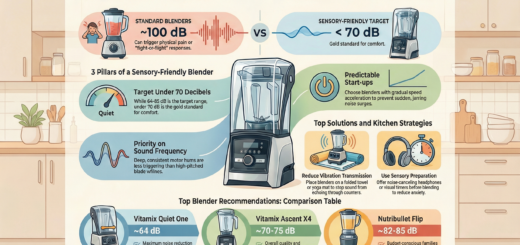
- Use a one loud appliance at a time rule so the blender and dishwasher are not running together.
- Put felt pads or tennis balls on chair legs to stop chairs from screeching across the floor.
- Run the dishwasher or washing machine when your child is not in the kitchen, such as after bedtime.
- Keep noise‑reducing headphones or ear defenders in a consistent spot in or near the kitchen so your child can grab them as needed.
Quieter appliances, such as dishwashers rated under about 44 dBA or immersion blenders, can further reduce the sound load.
Light: From Harsh to Gentle
Bright, cool, or flickering lighting in kitchens can cause headaches and anxiety for autistic people. Many report that fluorescent or very bright lighting makes it harder to focus on food or conversation.
Lighting adjustments that help:
- Switch to warm LED bulbs and avoid very bright, blue‑white lighting where possible.
- Install a dimmer switch so light levels can match your child’s energy and sensory tolerance.
- Use under‑cabinet lighting or small lamps for focused task lighting and keep the main overhead light off during calm meals.
- Limit shiny or very busy surfaces directly in the eating area to reduce visual glare and distraction.
Soft, predictable lighting can make the whole room feel less threatening during mealtimes.
Visual Calm: Organising What the Eyes See
Visual clutter forces the brain to process many details at once, which is especially draining for autistic children. A visually organised kitchen lets them focus more on eating and less on scanning the environment.
Ways to reduce visual overload:
- Keep countertops mostly clear, leaving out only a few daily essentials such as a kettle, one appliance, or a fruit bowl.
- Store foods in clear containers so your child can see what is available without digging through crowded cupboards.
- Add simple word labels or picture labels to shelves, bins, and drawers to make finding items predictable and less stressful.
- Place child‑safe items (plastic cups, plates, utensils) in lower drawers and keep sharp or hazardous items stored higher or locked away.
Visual order supports a sense of safety and predictability, which can lower anxiety before food even appears.
Smell and Temperature: Hidden Triggers
Cooking smells and kitchen heat can be surprisingly intense for autistic children, especially with foods like fish, strong spices, or frying oils. For some, smells alone are enough to cause nausea or refusal to enter the room.
Helpful adjustments:
- Turn on the extractor fan or open a window before cooking to move smells out quickly.
- If a strong‑smelling food is necessary, allow your child to eat in a nearby room or at a distance where the smell is tolerable.
- Offer cool drinks such as cold water or preferred beverages, since temperature can have a calming effect for some children.
- Keep the kitchen slightly cooler during cooking by opening doors, using a fan, or limiting how long the oven is on at once.
Supporting your child’s sense of smell and temperature can preserve enough energy for them to try at least some food.
Safety and Clear Boundaries
Clear, visible boundaries are often easier for autistic children to follow than repeated verbal reminders. A kitchen can feel safer when it shows clearly where is safe to stand and what is safe to touch.
Boundary ideas:
- Mark a red tape line on the floor in front of the stove or oven to show where children should stop when cooking is happening.
- Create a “yes drawer” or “yes shelf” at your child’s height containing only safe items such as plastic cups, simple snacks, or a favourite fidget.
- Store knives, glass, heavy pans, and cleaning products in high cupboards or locked drawers so you spend less time saying “don’t touch that.”
- Use simple visual rules on the fridge, such as picture icons for “wash hands,” “sit or stand in your spot,” and “ask before touching the stove.”
These supports can reduce conflict and make rules feel clear and fair to your child.
A Nearby Sensory Break Space
Even with a calmer kitchen, some days will still be overwhelming. A planned sensory break corner near the kitchen gives your child a way to regulate without fully disconnecting from family life.
Setting up a break space:
- Choose a small corner just outside the kitchen or in sight of the table where your child can sit if things feel too intense.
- Place a comfortable chair, beanbag, or cushion, plus a small basket with noise‑reducing headphones, a chewy or fidget, and perhaps a soft toy.
- Agree on a clear rule such as: “If it is too loud, you can go to your calm corner, and you do not have to ask.”
Having an accepted place to retreat often leads to fewer full meltdowns and more short, manageable breaks.
FAQ: Calm Kitchen & Autistic Children
1. Do I need to change the entire kitchen at once?
No. Many families see benefits by changing one sensory area at a time, such as sound or lighting, and then adjusting based on how the child responds. Starting with noise and light often gives the quickest relief.
2. My child still won’t eat at the table. Is the environment the only issue?
Not always. Food selectivity can also be linked to texture sensitivity, anxiety, or past negative experiences with eating. A calmer kitchen is a foundation; combining it with texture-based strategies and visual supports for meals is usually more effective.
3. What if my autistic child prefers to eat alone?
Some autistic children manage food better without the extra sensory and social load of a full family meal. Eating slightly earlier or in a quieter spot can still be healthy if it reduces stress and helps them eat enough.
4. How can I involve my child in cooking safely?
Start with simple, low-risk tasks away from heat, such as washing vegetables, stirring ingredients in a bowl, or assembling cold foods. Clear boundaries around the stove, visual recipes, and a stable step stool can help them participate safely.
5. When should we ask for professional help?
If mealtime distress is severe, your child is eating very few foods, losing weight, or mealtimes feel unmanageable most days, it can help to speak with a feeding therapist, occupational therapist, or dietitian who has experience with autism.
References
- Life Skills Advocate. “How To Create A Sensory-Friendly Kitchen.” https://lifeskillsadvocate.com/blog/how-to-create-a-sensory-friendly-kitchen/
- Move for Hunger. “Four Ways to Create A Sensory-Friendly Kitchen.” https://moveforhunger.org/blog/sensory-friendly-kitchen
- Embrace Autism. “Autism-friendly home design.”
Autism-friendly home design
- HSE. “Eating and autism.” https://www2.hse.ie/conditions/autism/autism-and-everyday-life/eating-and-autism/
- VHA Home HealthCare. “Mealtime Strategies for Children with Sensory Processing Challenges.”
Mealtime Strategies for Children with Sensory Processing Challenges
- Perth Speech Therapy. “Feeding Children with Sensory Needs: Strategies for Mealtime Success.”
Title: Feeding Children with Sensory Needs: Strategies for Mealtime Success
- St George’s University Hospitals. “Understanding Sensory Issues and their Impact on Mealtimes.” PDF link
- Autism home and kitchen safety resources (Autism Digest, Autism Connect, related safety guides). https://www.autismdigest.com/post/adapting-your-home-for-an-accessible-kitchen ,
How To Teach Kitchen Safety For Children With Autism
- Norfolk Autism. “Creating Sensory-Friendly Spaces at Home.”
Creating Sensory-Friendly Spaces at Home
- Simply Psychology. “Creating An Autism-Friendly Home.”
Creating An Autism-Friendly Home
- Sensory kit and regulation resources for children with sensory needs.
12 Sensory Kits That Just Make Sense
,Supporting Sensory- Avoidant Children with Mealtime Challenges: Tips for a Positive Feeding Experience
This post is part of our wider series on creating a calm home environment. For a full room-by-room breakdown, check out The Sensory-Friendly Kitchen Guide https://101autism.com/the-sensory-friendly-kitchen-guide/.
Discover more from Living with Autism
Subscribe to get the latest posts sent to your email.