Top 20 Autism Schools in the UK: Complete Guide for Parents (2026)
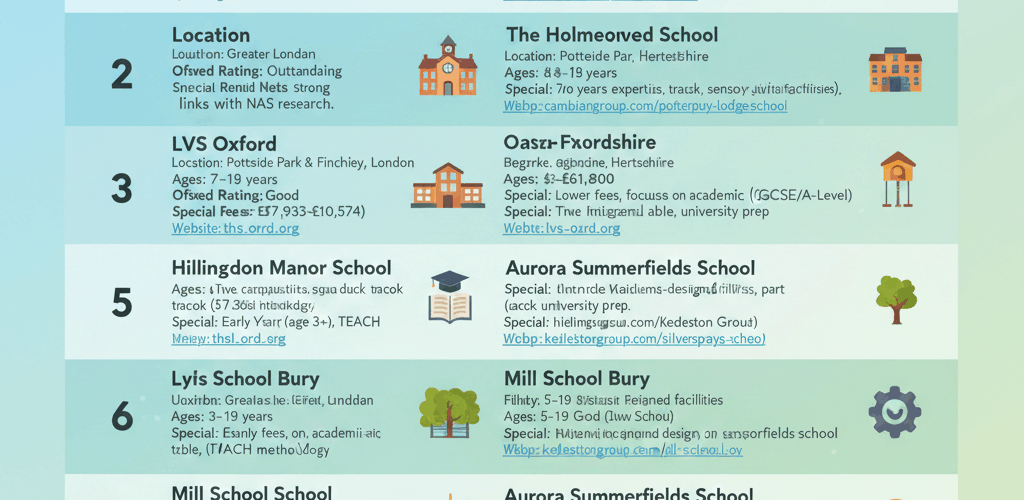
- TL;DR – Quick Summary
- Part 1: Top 10 Private Autism Schools in the UK
- 1. Sybil Elgar School (London)
- 2. Cambian Potterspury Lodge School (Hertfordshire)
- 3. The Holmewood School (London)
- 4. LVS Oxford (Oxfordshire)
- 5. Hillingdon Manor School (London)
- 6. Mill School Bury (Greater Manchester)
- 7. Aurora Summerfields School (Cheshire)
- 8. Silverways School (London)
- 9. The Rise School (London)
- 10. Kestrel House School (London)
- Part 2: Top 10 Council-Funded Autism Schools in the UK
- 1. TreeHouse School (London)
- 2. The Bridge School (Islington)
- 3. Woodlands School (Birmingham)
- 4. Westgate School (Hampshire)
- 5. Castle Hill School (Kent)
- 6. Unity College (Buckinghamshire)
- 7. The Link School (Surrey)
- 8. Phoenix School (Manchester)
- 9. Riverside School (Liverpool)
- 10. Appletree School (Leeds)
- Private vs Council-Funded Schools: Key Differences
- Understanding the EHCP Process
- How to Choose the Right Autism School
- Regional Coverage: Finding Schools Near You
- Frequently Asked Questions (FAQs)
- 1. What is the difference between a mainstream school and an autism school?
- 2. Do I need an EHCP to attend an autism school?
- 3. How much do private autism schools cost?
- 4. Can my local authority refuse to fund a private autism school?
- 5. What age do autism schools accept children?
- 6. Are council-funded autism schools as good as private ones?
- 7. How long does the EHCP process take?
- 8. Can I visit autism schools before applying?
- 9. What qualifications can my child achieve at an autism school?
- 10. Do autism schools provide therapy?
- 11. What happens if my child is excluded from an autism school?
- 12. Can my child attend an autism school in a different local authority area?
- 13. What support is available for non-verbal children?
- 14. Do autism schools have waiting lists?
- 15. What is the staff-to-student ratio in autism schools?
- 16. How do autism schools handle meltdowns and distress?
- 17. Can siblings attend the same school?
- 18. What happens after age 16 in autism schools?
- 19. Are autism schools inspected by Ofsted?
- 20. How do I appeal if my local authority refuses my preferred school?
- Understanding Ofsted Ratings
- The Admission Timeline: When to Start
- Financial Considerations and Funding
- Conclusion: Finding the Right Path for Your Child
- Related Resources on 101Autism.com
Choosing the right school for your autistic child is one of the most important decisions you’ll make as a parent. Whether you’re exploring private specialist settings or council-funded state schools, this comprehensive guide covers the top 20 autism schools across the UK, helping you find the perfect educational environment for your child’s unique needs. Before exploring schools, it’s helpful to have a clear understanding of your child’s unique autism characteristics and support needs
TL;DR – Quick Summary
Private Autism Schools: Typically cost £40,000-£75,000 annually, offer specialized therapeutic support, smaller class sizes (1:3 ratio), and accept local authority EHCP funding.
Council-Funded Schools: Free to attend with an Education, Health and Care Plan (EHCP), provide autism-specific education, and are maintained by local authorities.
Key Takeaway: Both private and state-funded options offer excellent autism education. Your choice depends on your child’s specific needs, local provision, and EHCP assessment outcomes.
Quick Action Steps:
- Request EHCP assessment from your local authority
- Visit schools in your area (both private and state options)
- Check latest Ofsted ratings
- Understand your legal rights under the Children and Families Act 2014
- Start the process 12-18 months before desired enrollment
If you haven’t yet received a diagnosis, start with our free autism screening tools to understand if a specialist assessment would be beneficial
Part 1: Top 10 Private Autism Schools in the UK
Private autism schools typically offer highly specialized provision with extensive therapeutic support, smaller class sizes, and significant parental choice. Most placements are funded by local authorities through EHCP agreements, though some families choose to fund independently.
1. Sybil Elgar School (London)
Location: Southall, Greater London
Ages: 4-22 years
Ofsted Rating: Outstanding
Annual Fees: £38,532 (day), £73,401 (boarding)
Established: 1965
Part of the National Autistic Society Education Group, Sybil Elgar School has over 60 years of experience supporting autistic learners. The school offers both day and residential placements, making it one of the most flexible options for families across the UK.
What Makes It Special:
- Autism-specific curriculum developed over six decades
- Comprehensive transition programs up to age 22
- Strong links with National Autistic Society research initiatives
- Sensory-rich learning environments
- Specialist sixth form provision
Curriculum Highlights: The school delivers personalized education pathways incorporating academic subjects, life skills, and vocational training. Students access speech and language therapy, occupational therapy, and psychological support as part of their daily provision.
In addition to school-based therapy, many families benefit from sensory tools and therapeutic products at home.
Admission Process: Contact the school directly, provide diagnostic reports and educational assessments, arrange assessment visits, and coordinate with your local authority’s SEND team for EHCP funding approval.
Contact: Havelock Road, Southall, UB2 4NY | autism.org.uk/our-schools/sybil-elgar
2. Cambian Potterspury Lodge School (Hertfordshire)
Location: Potters Bar, Hertfordshire
Ages: 8-18 years
Ofsted Rating: Good
Annual Fees: £67,779-£87,484
Established: 1956
One of the UK’s longest-established autism schools, Potterspury Lodge specializes in supporting students with autism and associated learning differences through a highly differentiated curriculum.
What Makes It Special:
- Nearly 70 years of autism education expertise
- Comprehensive sensory integration facilities
- Strong emphasis on communication development
- Individualized behavior support plans
- Extensive enrichment activities program
Curriculum Highlights: The school offers accredited qualifications including GCSEs, Functional Skills, and Entry Level Certificates, alongside therapeutic interventions integrated throughout the school day.
Admission Process: Initial inquiry, school visit and assessment, review of educational and medical records, consultation with current placement, and local authority funding arrangements.
Contact: Metropolitan House, 3 Darkes Lane, Potters Bar, EN6 1AG | cambiangroup.com/potterspury-lodge-school
3. The Holmewood School (London)
Location: Woodside Park & Finchley, London
Ages: 7-19 years
Ofsted Rating: Outstanding
Annual Fees: £61,800
Established: 1885 (reestablished for autism provision)
With over a century of educational heritage, Holmewood combines traditional values with cutting-edge autism-specific teaching methodologies across two London campuses.
What Makes It Special:
- Two purpose-built campuses in North London
- Outstanding Ofsted rating consistently maintained
- Structured transition programs to post-16 provision
- Strong academic track record with GCSE and A-Level provision
- Comprehensive family support services
Curriculum Highlights: Lower school, upper school, and sixth form divisions ensure age-appropriate learning. The curriculum balances academic achievement with social skills development and independence training.
Admission Process: Submit initial inquiry, provide diagnostic and educational documentation, arrange assessment visits, meet with admissions team, and coordinate EHCP funding with local authorities.
Contact: 88 Woodside Park Road, N12 8SH & 90 East End Road, N3 2SY | thsl.org.uk
4. LVS Oxford (Oxfordshire)
Location: Begbroke, Oxfordshire
Ages: 11-19 years
Ofsted Rating: Good
Annual Fees: £9,965-£10,579
Established: 2014
LVS Oxford stands out as one of the most affordable private autism schools in the UK, specializing in high-functioning autism and Asperger profiles with strong academic potential.
What Makes It Special:
- Significantly lower fees than comparable schools
- Focus on academically able autistic students
- Strong university preparation program
- Structured social skills development
- Modern facilities in rural setting
Curriculum Highlights: The school delivers GCSE and A-Level qualifications with additional support for social understanding, executive functioning, and emotional regulation.
Admission Process: Initial inquiry, school tours, formal application, needs assessment, funding discussions with local authorities, and comprehensive transition planning.
Contact: Spring Hill Road, Begbroke, OX5 1RX | lvs-oxford.org.uk
5. Hillingdon Manor School (London)
Location: Uxbridge, Greater London
Ages: 3-19 years
Ofsted Rating: Outstanding
Annual Fees: £47,300-£75,924
Established: 1999
Hillingdon Manor provides comprehensive autism education from early years through to sixth form, with a strong emphasis on developing independence and life skills.
What Makes It Special:
- Accepts children from age 3 (Early Years provision)
- Outstanding Ofsted rating
- Structured TEACCH methodology
- Extensive sensory facilities
- Strong transition support to adulthood
Curriculum Highlights: Age-appropriate curriculum incorporating sensory integration, communication development, academic learning, and functional life skills training.
Admission Process: Initial inquiry, school visit and assessment, review of diagnostic reports, multi-disciplinary assessment, and local authority placement funding collaboration.
Contact: The Manor, Harlington Road, Uxbridge, UB8 3HD | hillingdonmanorschool.org.uk
6. Mill School Bury (Greater Manchester)
Location: Bury, Greater Manchester
Ages: 5-19 years
Ofsted Rating: Good
Annual Fees: £47,000-£52,000
Established: 2020
Despite being relatively new, Mill School Bury has quickly established itself as a leading autism provision in the North West, offering tailored education for autistic children with additional needs.
What Makes It Special:
- Modern, purpose-designed facilities
- Part of Kedleston Group’s autism-specialist network
- Individualized learning pathways
- Strong emphasis on positive behavior support
- Comprehensive therapeutic integration
Curriculum Highlights: Bespoke curriculum addressing academic, social, and sensory needs with integrated therapy throughout the school day.
Admission Process: Contact school for information, arrange facility visits, submit diagnostic and educational reports, participate in assessment activities, and work with local authorities for placement funding.
Contact: Wellington Street, Bury, BL8 2BD | kedlestongroup.com/mill-school-bury
7. Aurora Summerfields School (Cheshire)
Location: Wilmslow, Cheshire
Ages: 5-19 years
Ofsted Rating: Good
Annual Fees: £67,984
Established: 2023
One of the newest entries in UK autism education, Aurora Summerfields brings innovative approaches to supporting young people with complex communication and social needs.
What Makes It Special:
- State-of-the-art facilities and resources
- Progressive therapeutic interventions
- Holistic approach to development
- Strong family partnership model
- Evidence-based practice implementation
Curriculum Highlights: Comprehensive curriculum integrating academic learning with therapeutic support, focusing on communication development and social understanding.
Admission Process: Request information package, arrange school visit, submit developmental and educational assessments, meet with admissions team, and coordinate local authority funding.
Contact: Summerfields Village Centre, Dean Row Road, Wilmslow, SK9 2TA | theauroragroup.co.uk/summerfields-school
8. Silverways School (London)
Location: Enfield, Greater London
Ages: 5-19 years
Ofsted Rating: Requires Improvement (new school, developing)
Annual Fees: £58,626
Established: 2021
A newer addition to London’s autism school provision, Silverways offers carefully designed environments accommodating sensory and learning requirements.
What Makes It Special:
- Modern autism-specific design
- Integrated therapeutic approach
- Focus on sensory regulation
- Part of established Kedleston Group
- Developing strong local partnerships
Curriculum Highlights: Autism-specific curriculum combining academic learning with social skills development and sensory regulation strategies.
Admission Process: Initial consultation with parents, review of educational and diagnostic reports, school visits and assessment, local authority collaboration, and transition planning.
Contact: St. Andrews Parish Centre, Silver Street, Enfield, EN1 3EG | kedlestongroup.com/silverways-school
9. The Rise School (London)
Location: Feltham, Greater London
Ages: 4-16 years
Ofsted Rating: Outstanding
Annual Fees: £45,000-£55,000 (approximate)
Established: 2014
The Rise School delivers mainstream curriculum adapted for autistic learners, with particular attention to communication skills and emotional regulation.
What Makes It Special:
- Outstanding Ofsted rating
- Adapted mainstream curriculum
- Strong emphasis on communication development
- Focus on meaningful social inclusion
- Comprehensive parent partnership program
Curriculum Highlights: National Curriculum subjects adapted to meet autism-specific learning styles, with extensive speech and language therapy integration.
Admission Process: Contact admissions department, provide diagnostic and educational documentation, arrange school visits and assessment, work with local authority SEND teams, and develop transition plans.
Contact: Browells Lane, Feltham, TW13 7EF | theriseschool.com
10. Kestrel House School (London)
Location: Crouch End, London
Ages: 5-16 years
Ofsted Rating: Good
Annual Fees: £48,000
Established: 2008
This small, friendly independent school provides supportive learning environments for autistic children with additional learning difficulties and complex needs.
What Makes It Special:
- Small class sizes (maximum 6 students)
- High staff-to-student ratio
- Intimate, family-like atmosphere
- Highly individualized curriculum
- Strong focus on communication and independence
Curriculum Highlights: Personalized learning programs addressing specific needs while promoting independence, communication skills, and social development.
Admission Process: Initial contact, school visits, review of reports and assessments, student assessment sessions, and local authority funding collaboration.
Contact: 104 Crouch Hill, Crouch End, N8 9EA | kestrelhouseschool.co.uk
Part 2: Top 10 Council-Funded Autism Schools in the UK
State-maintained autism schools provide free education through EHCP funding, offering specialist provision without private fees. These schools are maintained by local authorities and must meet Ofsted standards.
1. TreeHouse School (London)
Location: Muswell Hill, London
Ages: 4-19 years
Ofsted Rating: Outstanding
Funding: Free with EHCP (local authority maintained)
Established: 1997
TreeHouse School is one of the UK’s leading state-funded autism schools, consistently achieving Outstanding Ofsted ratings and delivering exceptional outcomes for autistic children.
What Makes It Special:
- Free to attend with EHCP
- Outstanding Ofsted rating consistently maintained
- Applied Behaviour Analysis (ABA) methodology
- Comprehensive early intervention programs
- Strong parent training and support
Curriculum Highlights: Evidence-based ABA approaches combined with National Curriculum content, extensive speech and language therapy, and individualized behavior support plans.
Admission Process: Requires EHCP naming TreeHouse School, consultation with local authority, school assessment visit, and transition planning with current setting.
Contact: Woodside Avenue, Muswell Hill, N10 3JA | treehouse.org.uk/school
2. The Bridge School (Islington)
Location: Islington, London
Ages: 4-19 years
Ofsted Rating: Outstanding
Funding: Free with EHCP
Established: 2014
A community special school maintained by Islington Council, The Bridge School provides outstanding autism provision with strong community links.
What Makes It Special:
- Outstanding Ofsted rating
- Strong community integration programs
- Excellent transition support
- Modern facilities
- Comprehensive therapeutic provision
Curriculum Highlights: Adapted National Curriculum with extensive therapeutic support, sensory integration, and life skills development.
Admission Process: EHCP assessment through local authority, consultation process, school visits, and coordinated transition planning.
Contact: Hungerford Road, London, N7 9LP
3. Woodlands School (Birmingham)
Location: Birmingham, West Midlands
Ages: 2-19 years
Ofsted Rating: Outstanding
Funding: Free with EHCP
Established: 1975
One of the UK’s longest-established state-funded autism schools, Woodlands offers comprehensive provision from early years through post-16.
What Makes It Special:
- Early years provision from age 2
- Outstanding Ofsted rating
- Extensive experience in autism education
- Strong vocational programs
- Excellent community partnerships
Curriculum Highlights: Age-appropriate curriculum with strong emphasis on communication, independence, and preparation for adulthood.
Admission Process: EHCP required naming Woodlands, Birmingham City Council consultation, assessment process, and transition support.
Contact: Grange Road, Longbridge, Birmingham, B31 2QT
4. Westgate School (Hampshire)
Location: Fareham, Hampshire
Ages: 4-16 years
Ofsted Rating: Outstanding
Funding: Free with EHCP
Established: 2003
Westgate School provides specialist autism education for Hampshire families, with outstanding Ofsted recognition and strong local authority support.
What Makes It Special:
- Outstanding Ofsted rating
- Purpose-built autism-specific facilities
- Strong sensory provision
- Excellent staff training programs
- Active parent partnership groups
Curriculum Highlights: Structured teaching approaches with comprehensive therapeutic support and individualized learning pathways.
Admission Process: Hampshire County Council EHCP process, school consultation, assessment visits, and coordinated admission.
Contact: West Street, Fareham, PO16 0EN
5. Castle Hill School (Kent)
Location: Tonbridge, Kent
Ages: 3-19 years
Ofsted Rating: Good
Funding: Free with EHCP
Established: 1978
Castle Hill provides comprehensive autism education for Kent families, with early years provision through to post-16 education.
What Makes It Special:
- Wide age range (3-19 years)
- Good Ofsted rating
- Extensive grounds and facilities
- Strong vocational provision
- Well-established post-16 pathways
Curriculum Highlights: Flexible curriculum pathways incorporating academic learning, life skills, and vocational preparation with integrated therapy.
Admission Process: Kent County Council EHCP naming Castle Hill, consultation process, assessment visits, and transition planning.
Contact: Maidstone Road, Tonbridge, TN9 2JP
6. Unity College (Buckinghamshire)
Location: Buckingham, Buckinghamshire
Ages: 11-19 years
Ofsted Rating: Good
Funding: Free with EHCP
Established: 2015
Unity College specializes in secondary-age autistic students, offering academic and vocational pathways toward meaningful adult outcomes.
What Makes It Special:
- Secondary and post-16 focus
- Strong academic provision
- Excellent vocational programs
- Modern facilities
- Partnership with local employers
Curriculum Highlights: GCSE and vocational qualifications with autism-specific support, focusing on independence and employability skills.
Admission Process: Buckinghamshire Council EHCP process, school consultation, assessment, and admission coordination.
Contact: Chandos Road, Buckingham, MK18 1AX
7. The Link School (Surrey)
Location: Woking, Surrey
Ages: 5-16 years
Ofsted Rating: Good
Funding: Free with EHCP
Established: 2012
The Link School provides specialist autism provision for Surrey families with strong emphasis on communication and social development.
What Makes It Special:
- Good Ofsted rating
- Strong communication focus
- Excellent sensory facilities
- Active family engagement
- Community integration programs
Curriculum Highlights: Communication-focused curriculum with extensive speech and language therapy, sensory integration, and social skills development.
Admission Process: Surrey County Council EHCP naming The Link School, consultation, assessment visits, and transition support.
Contact: Monument Road, Woking, GU21 5LY
8. Phoenix School (Manchester)
Location: Manchester, Greater Manchester
Ages: 4-16 years
Ofsted Rating: Outstanding
Funding: Free with EHCP
Established: 2010
Phoenix School serves the Manchester area with outstanding autism provision and strong links to local communities.
What Makes It Special:
- Outstanding Ofsted rating
- Strong community links
- Excellent transition programs
- Modern purpose-built facilities
- Comprehensive therapy provision
Curriculum Highlights: Adapted National Curriculum with integrated therapeutic support, focusing on communication, independence, and social understanding.
Admission Process: Manchester City Council EHCP process, consultation, school assessment, and coordinated admission.
Contact: Broadhurst Avenue, Manchester, M14 6WE
9. Riverside School (Liverpool)
Location: Liverpool, Merseyside
Ages: 3-19 years
Ofsted Rating: Good
Funding: Free with EHCP
Established: 2005
Riverside School provides comprehensive autism education for Liverpool families from early years through post-16 provision.
What Makes It Special:
- Wide age range including early years
- Good Ofsted rating
- Strong post-16 provision
- Excellent facilities
- Active parent support groups
Curriculum Highlights: Age-appropriate curriculum with strong emphasis on life skills, vocational preparation, and independence.
Admission Process: Liverpool City Council EHCP naming Riverside, consultation process, assessment, and transition planning.
Contact: Riverside Drive, Liverpool, L19 3QN
10. Appletree School (Leeds)
Location: Leeds, West Yorkshire
Ages: 4-16 years
Ofsted Rating: Good
Funding: Free with EHCP
Established: 2008
Appletree School serves Leeds families with specialist autism provision and strong emphasis on preparing students for adult life.
What Makes It Special:
- Good Ofsted rating
- Strong life skills focus
- Excellent staff expertise
- Active community partnerships
- Comprehensive therapy integration
Curriculum Highlights: Functional curriculum incorporating academic learning, life skills, and vocational preparation with therapeutic support.
Admission Process: Leeds City Council EHCP process, school consultation, assessment visits, and coordinated admission.
Contact: Appletree Lane, Leeds, LS15 4HP
Private vs Council-Funded Schools: Key Differences
Cost Comparison
Private Schools:
- Annual fees: £38,000-£87,000
- Most funded through local authority EHCP agreements
- Some families self-fund
- Additional costs may apply for boarding or extra therapies
Council-Funded Schools:
- Free to attend with EHCP
- No tuition fees
- Local authority maintains the school
- Therapy and support included at no cost
Class Sizes and Staffing
Private Schools:
- Typically 4-6 students per class
- Staff-to-student ratio often 1:2 or 1:3
- Specialist therapy staff on-site full-time
Council-Funded Schools:
- Usually 6-8 students per class
- Staff-to-student ratio typically 1:3 or 1:4
- Therapy provided as specified in EHCP
Geographic Accessibility
Private Schools:
- Accept students from across the UK
- Local authorities may fund out-of-area placements
- Boarding options available at some schools
- Transport arranged by local authorities
Council-Funded Schools:
- Priority for residents
- Limited places for out-of-borough students
- Usually day placements only
- Transport provided within local authority area
Curriculum Flexibility
Private Schools:
- Highly individualized programs
- Greater flexibility in approach
- May offer alternative qualifications
- Can adapt to individual needs quickly
Council-Funded Schools:
- Follow National Curriculum framework
- Good individualization within structure
- Standard qualification pathways
- Changes require local authority approval
Understanding the EHCP Process
An Education, Health and Care Plan (EHCP) is essential for accessing specialist autism schools in the UK. Here’s how to navigate the process successfully.
Understanding the autism assessment and diagnosis process is crucial before beginning EHCP applications.
Step 1: Request an EHCP Assessment
Contact your local authority’s SEND team in writing, requesting an EHCP assessment for your child. Include:
- Detailed description of your child’s needs
- Supporting evidence from professionals (GP, pediatrician, educational psychologist)
- Current school reports
- Any diagnostic reports
The local authority has 6 weeks to decide whether to proceed with assessment.
Step 2: The Assessment Process
If approved, the local authority gathers evidence from:
- Educational professionals
- Health professionals
- Social care (if involved)
- You as parents
- Your child (where appropriate)
This process should take up to 16 weeks.
Step 3: Draft EHCP
The local authority issues a draft EHCP outlining:
- Your child’s needs (Sections B and C)
- Provision required (Sections F and G)
- Named school (Section I)
You have 15 days to comment and request changes.
Step 4: Final EHCP
After considering your views, the local authority issues the final EHCP. The entire process from request to final plan should take no more than 20 weeks.
Step 5: School Placement
Your EHCP must name a specific school. You have the right to:
- Express a preference for any school
- Visit schools before naming preference
- Request independent or out-of-borough schools if local provision is unsuitable
Your Rights
Under the Children and Families Act 2014, you have the right to:
- Request EHCP assessment
- Contribute to the assessment
- Express school preference
- Appeal decisions through SEND Tribunal
- Request Annual Reviews
For detailed guidance on the EHCP process, visit our comprehensive EHCP guide (internal link to be added if page exists).
How to Choose the Right Autism School
Consider Your Child’s Specific Needs
Different schools excel in different areas. Consider:
Communication Needs:
- Non-verbal or minimally verbal children may benefit from schools with strong AAC (Augmentative and Alternative Communication) programs
- Verbally able children might thrive in environments focusing on social communication
Sensory Profile:
- High sensory needs require schools with extensive sensory facilities
- Low sensory needs may suit less specialized environments
Learning Profile:
- Academically able students benefit from schools offering GCSE/A-Level pathways
- Students with learning disabilities need functional skills-focused curricula
Behavioral Support:
- Complex behavioral needs require schools with specialist positive behavior support teams
- Lower-level support needs may suit less intensive environments
Visit Multiple Schools
Never commit to a school without visiting. During visits:
- Observe classroom environments
- Watch staff-student interactions
- Ask about staff training and qualifications
- Request information on staff turnover
- Speak with current parents if possible
- Ask about Ofsted reports and action plans
Review Ofsted Reports
Check recent Ofsted reports for:
- Overall effectiveness rating
- Quality of education
- Behavior and attitudes
- Personal development
- Leadership and management
- Areas for improvement
Access reports at reports.ofsted.gov.uk
Consider Practical Factors
Location and Transport:
- How far is the school?
- Will local authority provide transport?
- What is the journey time?
School Hours:
- What are the operating hours?
- Is extended day provision available?
- Are there after-school clubs?
Term Dates:
- Do term dates align with siblings’ schools?
- What holiday provision exists?
Ask Critical Questions
Academic Provision:
- What qualifications do students achieve?
- What are progression pathways?
- How is progress measured?
Therapeutic Support:
- What therapy is available?
- How often do students access therapy?
- Are therapists qualified and registered?
Transition Support:
- How do you support transition to adult services?
- What are typical post-16 outcomes?
- Do you have alumni networks?
Staff Expertise:
- What autism training do staff receive?
- What are staff qualifications?
- What is staff turnover rate?
Regional Coverage: Finding Schools Near You
London and South East
London has the highest concentration of autism schools, with both private and council-funded options across all boroughs:
- Private: Sybil Elgar, The Holmewood, Hillingdon Manor, The Rise, Kestrel House, Silverways
- Council: TreeHouse, The Bridge School
South East counties (Surrey, Kent, Hampshire, Berkshire) offer good provision:
- Castle Hill School (Kent)
- Westgate School (Hampshire)
- The Link School (Surrey)
Midlands
West Midlands has strong provision centered around Birmingham:
- Woodlands School (Birmingham – council-funded)
- Multiple private providers in Coventry and Birmingham areas
East Midlands has developing provision but fewer specialist options:
- Consider schools in Nottingham, Leicester, and Derby
- Some families access out-of-area placements
North West
Greater Manchester and Merseyside have expanding provision:
- Mill School Bury (private)
- Phoenix School (Manchester – council-funded)
- Riverside School (Liverpool – council-funded)
Cheshire offers:
- Aurora Summerfields (private)
- Good links to Manchester and Liverpool schools
North East
Provision in the North East is developing, with increasing specialist schools in:
- Newcastle upon Tyne
- Sunderland
- Middlesbrough
Many families access schools in Yorkshire for broader choice.
Yorkshire and Humber
Yorkshire has good coverage across Leeds, Sheffield, and York:
- Appletree School (Leeds – council-funded)
- Multiple private providers in major cities
South West
The South West has scattered provision across:
- Bristol
- Devon
- Cornwall
Rural families may face longer travel times or consider boarding options.
Scotland
Scotland operates a different system with Regional Improvement Collaboratives. Key provisions include:
- Struan School (Fife)
- Eastpark School (Glasgow)
- Oaklands School (Edinburgh)
Wales
Wales has developing autism school provision in:
- Cardiff
- Swansea
- Newport
Some families access schools in English border areas.
Northern Ireland
Northern Ireland provisions include:
- Fleming Fulton School (Belfast)
- Knockevin School (Belfast)
- Regional day schools across counties
Frequently Asked Questions (FAQs)
1. What is the difference between a mainstream school and an autism school?
Autism schools provide specialist environments designed specifically for autistic children. Key differences include smaller class sizes (4-8 students vs 30 in mainstream), higher staff ratios (1:3 vs 1:30), autism-specific teaching approaches, integrated therapeutic support, sensory-friendly environments, and staff with specialist autism training. Mainstream schools follow standard National Curriculum with limited adaptations.
2. Do I need an EHCP to attend an autism school?
Yes, both private and council-funded autism schools require an Education, Health and Care Plan (EHCP). The EHCP must name the specific school in Section I. Without an EHCP, local authorities will not fund placement at specialist schools. Start the EHCP process 12-18 months before your desired enrollment date.
3. How much do private autism schools cost?
Private autism school fees range from approximately £38,000 to £87,000 annually for day placements. Boarding options cost significantly more, sometimes exceeding £100,000 per year. However, most placements are funded by local authorities through EHCP agreements, so families rarely pay fees directly. Only a small percentage of families choose to self-fund private education.
4. Can my local authority refuse to fund a private autism school?
Local authorities can refuse private school funding if they can demonstrate suitable provision exists in maintained schools. However, if no appropriate local provision meets your child’s needs, they must fund an independent school. You have the right to appeal refusals through the SEND Tribunal. Gather evidence showing why local options are unsuitable for your child’s specific needs.
5. What age do autism schools accept children?
Autism schools accept children from various ages. Early years provision starts from age 2-3 at some schools (TreeHouse, Woodlands, Hillingdon Manor). Primary provision begins at age 4-5 at most schools. Secondary-focused schools accept from age 11. Some schools provide education up to age 19 or 25 for post-16 students. Check individual school age ranges when researching options.
6. Are council-funded autism schools as good as private ones?
Yes, many council-funded autism schools achieve Outstanding Ofsted ratings and deliver exceptional education. TreeHouse School, The Bridge School, Woodlands School, and Phoenix School all have Outstanding ratings. The main differences are funding structure and sometimes class sizes, but educational quality can be equally high in maintained schools. Ofsted ratings provide objective quality measures.
7. How long does the EHCP process take?
The legal timeframe for EHCP assessment and plan completion is 20 weeks from the initial request. However, many local authorities exceed this timeframe. In reality, the process often takes 6-12 months. Start early and keep detailed records of all communications. If your local authority misses deadlines, you can complain or seek legal advice.
8. Can I visit autism schools before applying?
Yes, absolutely. Visiting schools is essential before making decisions. Contact schools directly to arrange visits. Most schools welcome parent visits and offer tours, observation opportunities, and meetings with leadership teams. Visit multiple schools to compare environments, approaches, and cultures. Some schools have open days specifically for prospective families.
9. What qualifications can my child achieve at an autism school?
Autism schools offer various qualifications depending on student ability levels. Academic pathways include GCSEs, A-Levels, and BTECs. Functional skills qualifications cover English, Maths, and ICT at Entry Level, Level 1, and Level 2. Vocational qualifications include industry-specific certifications. Life skills awards recognize achievements in independence, communication, and social skills. Schools tailor qualification pathways to individual student profiles.
10. Do autism schools provide therapy?
Yes, specialist autism schools integrate therapy throughout the school day. Most schools provide speech and language therapy, occupational therapy, and educational psychology support. Some also offer music therapy, art therapy, and sensory integration therapy. Therapy is written into EHCPs and delivered by qualified, registered professionals. Private schools often have therapists on-site full-time, while council-funded schools provide therapy as specified in individual EHCPs.
11. What happens if my child is excluded from an autism school?
Permanent exclusion from specialist autism schools is extremely rare, as these settings are designed to support complex needs. If behavioral difficulties arise, schools typically increase support through modified approaches, additional staff, or behavior intervention plans. If a placement breaks down, the local authority remains responsible for finding alternative suitable provision. Your EHCP continues in force and must be met elsewhere.
12. Can my child attend an autism school in a different local authority area?
Yes, children can attend schools outside their home local authority area. If your local authority cannot provide suitable provision locally, they must consider out-of-area placements. You can name any school in your EHCP, and if it’s appropriate for your child’s needs, the local authority must fund it. Cross-border placements are common, especially for specialist provisions.
13. What support is available for non-verbal children?
Autism schools provide extensive communication support for non-verbal students, including Picture Exchange Communication System (PECS), communication books and boards, speech-generating devices and apps, Makaton signing, intensive speech and language therapy, and Alternative and Augmentative Communication (AAC) systems. Many schools specialize in supporting non-verbal learners with dedicated communication teams.
14. Do autism schools have waiting lists?
Most popular autism schools have waiting lists, sometimes spanning 12-24 months. Council-funded schools often prioritize local residents. Private schools accept students from wider areas but still have capacity limits. Starting the EHCP process early and applying to multiple schools increases your chances. Some local authorities maintain lists of schools with immediate availability.
15. What is the staff-to-student ratio in autism schools?
Autism schools maintain much higher staffing levels than mainstream schools. Typical ratios are 1:3 (one adult for every three students), 1:2 for students with higher needs, and 1:1 support for individual students when specified in EHCPs. Some schools achieve ratios as high as 2:1 for students with complex needs. These ratios ensure individualized attention and safety.
16. How do autism schools handle meltdowns and distress?
Autism schools use positive behavior support frameworks focusing on prevention rather than reaction. Strategies include environmental modifications to reduce triggers, sensory regulation spaces and tools, proactive sensory breaks, visual schedules and predictability, de-escalation techniques, and trauma-informed approaches. Staff receive specialist training in supporting autistic children through distress, never using punitive approaches.
17. Can siblings attend the same school?
Mainstream siblings cannot attend specialist autism schools as these settings are exclusively for children with diagnosed autism and EHCPs. However, if multiple siblings have autism diagnoses and EHCPs, they can potentially attend the same autism school if it meets each child’s individual needs. Some families prefer different schools for different children based on specific needs.
18. What happens after age 16 in autism schools?
Many autism schools offer post-16 provision up to age 19 or even 25. Post-16 education focuses on functional skills, vocational training, work experience placements, independent living skills, community integration, and transition to adult services. Some students progress to mainstream colleges with support, specialist colleges, supported internships, or day services. Transition planning begins at age 14.
19. Are autism schools inspected by Ofsted?
Yes, all autism schools in England are inspected by Ofsted under the same framework as other schools. Independent schools are inspected every 3-4 years, while maintained schools are inspected based on their previous rating. Ofsted assesses quality of education, behavior and attitudes, personal development, leadership and management, and safeguarding. Reports are publicly available at reports.ofsted.gov.uk.
20. How do I appeal if my local authority refuses my preferred school?
If your local authority names a different school in your EHCP or refuses to assess, you can appeal to the SEND Tribunal. Register your appeal within 2 months of the decision. Gather evidence showing why your preferred school is appropriate and local options are unsuitable. Consider obtaining independent reports. Many families win appeals, especially with strong evidence. Organizations like IPSEA provide free legal advice for SEND appeals.
Autism often presents differently in girls, who may be overlooked in diagnosis—learn more about the signs of autism in girls.
Understanding Ofsted Ratings
Ofsted inspects all UK schools and assigns overall effectiveness ratings:
Outstanding: Exceptional quality with consistently high standards across all areas. These schools demonstrate innovative practice and outstanding leadership.
Good: Schools perform well, providing quality education with strong outcomes for most students. These schools meet all national standards effectively.
Requires Improvement: Schools have some weaknesses needing addressing but are not failing. They provide adequate education but lack consistency.
Inadequate: Serious weaknesses exist. Schools may be judged Inadequate overall or placed in Special Measures requiring significant improvement.
When reviewing Ofsted reports, focus on:
- Date of inspection (more recent is more relevant)
- Specific judgments for autism-specific provision
- Progress since previous inspection
- Leadership response to recommendations
- Areas for improvement and action plans
The Admission Timeline: When to Start
18-24 Months Before Desired Start Date
- Research potential schools
- Begin gathering evidence of needs
- Request EHCP assessment if not already in place
- Attend open days and information sessions
12-18 Months Before
- Complete EHCP assessment process
- Arrange school visits
- Shortlist preferred schools
- Begin discussions with local authority
6-12 Months Before
- Name preferred school in draft EHCP
- Attend transition meetings
- Appeal if necessary
- Finalize EHCP with school named
3-6 Months Before
- Confirm placement
- Arrange transition visits
- Meet key staff
- Develop transition plan
1-3 Months Before
- Increase transition visits
- Finalize transport arrangements
- Purchase uniform/equipment
- Prepare your child
First Term
- Maintain close contact with school
- Attend settling-in meetings
- Monitor progress
- Adjust support as needed
Starting early is crucial, especially for popular schools or if you anticipate local authority resistance to your preferences.
Financial Considerations and Funding
Local Authority Funding
Most autism school placements are funded through EHCP agreements. Local authorities must fund appropriate provision regardless of cost. Annual costs range from £40,000 to over £100,000, all covered by the authority.
What Local Authorities Fund:
- Tuition fees
- Therapeutic support specified in EHCP
- Transport to and from school
- Specialist equipment and resources
- Additional adult support as needed
What May Not Be Funded:
- Uniform costs
- School trips not part of curriculum
- Extra-curricular activities
- Additional therapies not in EHCP
- Personal care items
Self-Funding Considerations
Some families choose to self-fund autism school places, though this is uncommon given high costs. Self-funding may be considered if:
- Local authority refuses assessment
- You prefer not to engage with EHCP process
- You want school choice without authority involvement
- Your child doesn’t meet EHCP criteria but needs specialist provision
Self-funding costs annually:
- Day placement: £38,000-£87,000
- Boarding: £70,000-£130,000+
- Additional therapies: £5,000-£15,000
- Transport: £3,000-£10,000
Most families pursue EHCP routes rather than self-funding.
Additional Financial Support
Disability Living Allowance (DLA): Available for children under 16 with additional care needs. Does not affect school funding but helps with extra costs.
Personal Independence Payment (PIP): For young people 16+, replacing DLA. Helps with costs related to disability.
Carers Allowance: Available for parents providing substantial care. Check eligibility through Citizens Advice.
Local Authority Short Breaks: Some authorities provide funding for respite care or activities.
Charitable Grants: Organizations like Family Fund, Cerebra, and others provide grants for equipment, respite, and activities.
Conclusion: Finding the Right Path for Your Child
Choosing an autism school represents one of the most significant decisions in your child’s educational journey. Whether you opt for a private specialist setting or a council-funded school, the UK offers numerous excellent options for autistic children.
Key Takeaways:
- Start Early: Begin the EHCP process 18-24 months before your desired start date
- Visit Schools: Never commit without visiting multiple options and observing in action
- Know Your Rights: Understand EHCP legislation and your entitlement to appropriate provision
- Consider All Options: Both private and council-funded schools offer excellent education
- Think Long-Term: Consider post-16 pathways and transition support from the beginning
- Trust Your Instincts: You know your child best—choose environments where they’ll thrive
- Get Support: Organizations like IPSEA, SOSSEN, and Contact offer free advice
- Build Evidence: Document your child’s needs comprehensively to support applications
- Stay Informed: Check Ofsted reports and keep updated on school developments
- Maintain Perspective: The right school will support your child’s unique strengths and needs
The autism schools featured in this guide represent some of the UK’s finest provisions, each offering unique approaches to supporting autistic learners. From long-established institutions like Sybil Elgar School with over 60 years of experience to innovative newer settings like Aurora Summerfields, you have excellent options available.
Remember that the “best” school is the one that best meets your individual child’s needs. An Outstanding Ofsted rating matters less than whether the environment, approach, and culture suit your child’s learning style, communication needs, and sensory profile.
Next Steps
- Download our EHCP Application Checklist
- Join our Parent Support Community
- Read our Guide to SEND Tribunal Appeals
- Explore our Regional School Directories
- Access our Autism Education Resources Library
Get Expert Support
If you need personalized guidance choosing autism schools or navigating the EHCP process, consider:
- IPSEA (Independent Provider of Special Education Advice): Free legal advice – ipsea.org.uk
- Contact (for families with disabled children): Support and information – contact.org.uk
- National Autistic Society: School guidance and support – autism.org.uk
- SOSSEN (Special Needs Jungle): Community support and advice – specialneedsjungle.com
- Council for Disabled Children: Information and resources – councilfordisabledchildren.org.uk
Your child deserves an education that celebrates their strengths, supports their challenges, and prepares them for a fulfilling future. With careful research, early planning, and determination, you can secure the perfect autism school placement.
Last Updated: November 2025
Next Review: March 2026
This guide is regularly updated with current information on fees, Ofsted ratings, and provision. If you notice outdated information, please contact us.
Related Resources on 101Autism.com
- Understanding Autism Diagnosis: Complete UK Guide
- EHCP Application Process: Step-by-Step Walkthrough
- Autism-Friendly Teaching Strategies for Home and School
- Transition Planning: From School to Adulthood
- Regional Special Educational Needs Services Directory
- Parent Support Groups: Find Your Local Community
- Autism Assessment and Diagnosis: What to Expect
- Educational Psychology Reports: How to Request and Use Them
- Special Educational Needs Tribunal: A Parent’s Guide
- Home Education for Autistic Children: Pros, Cons, and Practicalities
Read More
- Sensory Harbor: Free Calming Game for Autistic Kids & Adults
- Christmas Gifts for Autistic Kids Ages 5–10 (2026): 8 Bestselling Picks, Honestly Decoded
- Best Headphones for Teens with Autism (2025): A Parent’s Honest Guide
- Understanding the Process: What Happens After a Referral for an Autism Evaluation
- Apps for autistic learners
Discover more from Living with Autism
Subscribe to get the latest posts sent to your email.




1 Response
[…] comprehensive guide introduces the top autism schools in the UK. We now delve deeper into the unique features that set these institutions apart. From pioneering […]