5 Signs Your 1-Year Old May Be Autistic
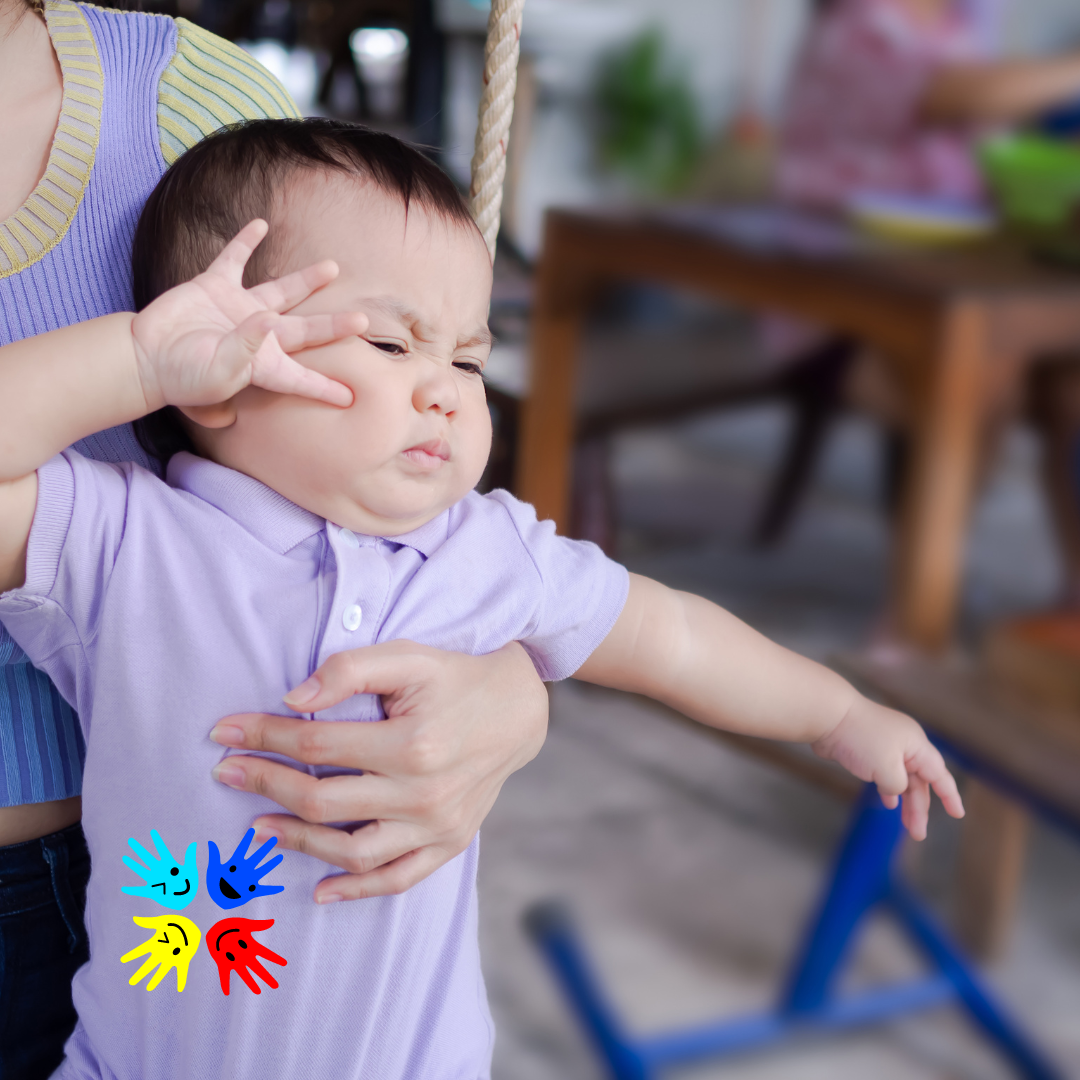
- 5 Signs Your 1-Year-Old May Be Autistic
- 1) The first sign – is delayed babbling
- 2) Another early sign – hand flapping
- Autism Red Flags Around 12 Months
- What Is Typical at 12 Months?
- Can Autism Be Diagnosed at 12 Months?
- What To Do If You’re Worried
- 3) Lack of eye contact at 12 months
- 4) Unusual sensory behaviors
- 5) Not responding to their name by 14 months
5 Signs Your 1-Year-Old May Be Autistic
Quick guide for early autism detection in babies
5 Early Autism Signs in 1-Year-Olds:
- Delayed Babbling – No babbling by 12 months (typical: 4-6 months)
- Hand Flapping – Unusual repetitive arm movements
- Lack of Eye Contact – Avoiding or difficulty maintaining eye contact
- Unusual Sensory Behaviors – Extreme reactions to sounds/textures
- Not Responding to Name – No response by 14 months
Delayed Babbling
Most babies start babbling around 4-6 months, but babies with autism may not start until 12 months or later. This delay can impact future language development.
Hand Flapping
Repetitive hand or arm movements that seem unusual or excessive. Many typical toddlers flap when excited; it is more meaningful when it is frequent and appears together with social-communication differences.
Lack of Eye Contact
By 12 months, babies typically make and maintain eye contact during interactions. Autistic babies may consistently avoid eye contact or have difficulty sustaining it.
Unusual Sensory Behaviors
Extreme sensitivity to sounds, textures, or lights, or conversely, seeking intense sensory input through constant movement or touching.
Not Responding to Name
By 14 months, children should consistently turn or respond when their name is called from various distances and tones. Lack of response may indicate hearing issues or autism.
Key Takeaways
- Early detection matters: Identifying signs early leads to better outcomes with intervention
- Not all signs = autism: Individual behaviors don’t confirm autism – look for patterns
- Diagnosis timing: Formal diagnosis typically occurs around ages 3-4, but early intervention can start sooner
- Professional assessment needed: Only qualified medical professionals can diagnose autism
- Every child is unique: Development varies, so compare patterns rather than isolated behaviors
🚨 If You Notice These Signs
Don’t wait. Contact your pediatrician immediately to discuss your concerns and request a developmental assessment. Early intervention can make a significant difference.
Read Complete Guide →Signs of autism in a one-year-old can be challenging. Many behaviors are familiar to most babies and toddlers. These include those listed below. However, you may notice some red flags in your child’s development. These can point to autism spectrum disorder (ASD). If you suspect your little one has ASD, schedule an appointment with their pediatrician as soon as possible. Remember that not all children with ASD will exhibit these behaviors.
1) The first sign – is delayed babbling
One of the earliest signs of autism is delayed babbling. Most babies start babbling around 4-6 months old. However, a baby with autism may not start babbling until much later. Sometimes, they may not start until they’re one year old or older. If your child isn’t babbling by 12 months, it’s worth mentioning to your pediatrician. They might recommend an evaluation for delays in communication and social development.
Babies who are late talkers often have trouble learning language skills as they age. This makes it challenging for them to communicate their needs and wants to others.
Children who are late talkers must receive therapy early on so that their language skills don’t continue to lag.
2) Another early sign – hand flapping
One of the earliest signs of autism is hand flapping. If you notice your 1-year-old waving their arms in an unusual way, it might indicate autism. If you’re concerned, talk to your child’s doctor. Other early symptoms of autism include:
| Symptom | Description |
| 1 | Not making eye contact. |
| 2 | Not responding to their name. |
| 3 | Not smiling when you smile at them. |
If you have concerns about your one-year-old, take them to their pediatrician.
A diagnosis of autism can come later because many children on the spectrum aren’t diagnosed until age 3 or 4.
An autism diagnosis is not a prediction of what your child will be able to do. Early support (speech therapy, play-based and developmental therapies, parent coaching) helps many children build communication and everyday skills, and every child’s path is different. There is no medication that treats autism itself; doctors sometimes use medication for related issues such as sleep problems.
Autism Red Flags Around 12 Months
Quick answer: At 12 months, the signs that matter most are social and communication signs: little or no babbling, no gestures such as pointing, showing or waving, rarely responding to their name, and little shared attention (looking where you look or point). Any loss of babbling, words or social skills, at any age, should be checked right away.
Red flags commonly listed by the CDC, the American Academy of Pediatrics and autism organizations:
- By 9 months: few or no back-and-forth smiles, sounds or facial expressions.
- By 12 months: no babbling; no back-and-forth gestures such as pointing, showing, reaching or waving; little or no response to their name.
- By 16 months: no single words.
- By 24 months: no meaningful two-word phrases (not just repeating).
- At any age: loss of speech, babbling or social skills they used to have.
One sign on its own is not a diagnosis. These are reasons to ask for a developmental screening, not proof of autism.
What Is Typical at 12 Months?
CDC milestones for around 12 months include waving “bye-bye”, calling a parent “mama” or “dada” (or another special name), understanding “no”, playing games like pat-a-cake, looking for things they saw you hide, picking up small objects with thumb and finger, and pulling up to stand or walking while holding furniture. Babies vary a lot, and missing one milestone is common.
Usually not red flags on their own: hand flapping when excited, shyness with strangers, walking a bit later, or liking to line up or bang toys. They matter more when they come together with the social-communication signs above. Studies following baby siblings of autistic children found that differences in social engagement often become clearer between 6 and 12 months (Ozonoff et al., 2010), and that repetitive behaviors at 12 months were more frequent in infants later diagnosed with autism, although many typically developing babies show some of them too (Wolff et al., 2014).
Can Autism Be Diagnosed at 12 Months?
Sometimes, but usually not yet. The American Academy of Pediatrics recommends autism-specific screening at the 18- and 24-month checkups, on top of developmental monitoring at every visit (Hyman, Levy & Myers, 2020). The most widely used screener, the M-CHAT-R/F, is designed for 16 to 30 months; once your child is 16 months you can try our free M-CHAT-R toddler screener. A large study found that autism diagnoses made by experienced clinicians as early as 14 months were usually stable later on (Pierce et al., 2019), but at 12 months most clinicians will monitor closely and refer for early intervention rather than give a firm diagnosis.
What To Do If You’re Worried
- Write it down. Note what you see and when, and take short videos of babbling, responding to name and play.
- Ask your pediatrician for a developmental screening now. You don’t have to wait for the 18-month visit.
- Check hearing. Hearing loss can look like not responding to name or delayed babbling, so a hearing test is often one of the first steps.
- Contact your state’s Early Intervention program. In the US, every state offers a free evaluation for children under 3 (IDEA Part C). You can usually refer your child yourself, and services don’t require an autism diagnosis.
- Keep playing. Face-to-face games, copying your baby’s sounds and naming what they look at all support communication while you wait.
Sources: CDC, Milestones by 1 Year; NICHD, What are the symptoms of autism?; Hyman SL, Levy SE, Myers SM. Pediatrics. 2020;145(1):e20193447; Ozonoff S et al. J Am Acad Child Adolesc Psychiatry. 2010;49(3):256-266; Wolff JJ et al. J Child Psychol Psychiatry. 2014;55(8):945-953; Pierce K et al. JAMA Pediatrics. 2019;173(6):578-587. Written by Dror Arbel, a parent, not a clinician. Last updated October 2026.
3) Lack of eye contact at 12 months
At 12 months, autistic babies may avoid eye contact or have difficulty making eye contact. This can be one of the earliest signs of autism. You must talk to your doctor if your baby isn’t making eye contact. They will do a developmental assessment. They will ensure there are no other reasons for this behavior. Possible causes include something in their environment or a problem with their vision. You should also keep track of any other symptoms. Then, you can report them to your doctor at your next appointment.
4) Unusual sensory behaviors
One of the most common signs of autism in young children is unusual sensory behaviors. This can manifest in several ways, such as being overly sensitive to specific sounds or textures or needing constant movement. If you notice your child exhibiting these behaviors, seeking a professional opinion is worth it. Many other conditions could be causing these same symptoms, so a diagnosis from an expert will be necessary.
5) Not responding to their name by 14 months
When you call your child’s name and they don’t respond, it could signify that they’re autistic. Try calling their names from different distances and tones to see if they react. If they still don’t respond, it could be cause for concern. Observe the rest of their behavior to determine whether or not there are other signs of autism. Does your child have repetitive movements? Do they have difficulty maintaining eye contact? Do they avoid physical contact with others? These may also be indications of autism.
About 101Autism.com
This site is about the daily life of a family with an autistic member. It shares the moments of glory and the agony of pain.
On this site, we will expose scenarios from our daily lives, and we will share those stories with you.
We encounter numerous products daily that impact our lives. We want to share these experiences with you by showcasing as many products as possible. We hope you find it helpful!
This site will show pictures of real-life families living with autism. We hope they inspire and guide you in your journey through autism!
Some relevant articles related to signs of autism in a one-year-old include:
What’s It Like Living With Autism?
What Can I Do To Help My Child With Autism?
If you suspect your child has been affected by these signs, please consult their doctor for more information.
Frequently Asked Questions About Autism in 1-Year-Old Babies
Expert guidance on recognizing early signs of autism spectrum disorder and supporting your child’s development.
Detecting signs of autism in 1-year-old babies can be challenging, as some behaviors are typical in most infants. However, certain red flags you might notice in your child’s development could indicate autism spectrum disorder (ASD).
While it’s crucial to remember that not all children with ASD will exhibit these behaviors, here are some signs that might suggest autism in a 1-year-old:
- Delayed babbling: Most babies start babbling around 4-6 months old. A baby with autism may not begin babbling until much later.
- Hand flapping: This involves unusual arm movements. For instance, waving their arms around in a distinctive way could be a sign of autism.
- Lack of eye contact: Autistic babies may avoid eye contact or have difficulty maintaining it.
- Unusual sensory behaviors: Sensory sensitivities or seeking behaviors might be observed, such as reacting strongly to specific sounds or textures.
- Not responding to their name: If your 1-year-old doesn’t react or respond when called, it could be cause for concern.
It’s essential to be proactive and consult with your child’s pediatrician if you notice any potential signs of autism. Remember, a proper diagnosis can only be made by a medical professional experienced in child development.
While every child develops at their own pace, significant delays in communication skills should be addressed. This includes delays in babbling or attempts to communicate needs and wants.
Discuss these concerns with a healthcare provider. Early intervention services can support a child’s language development and communication skills effectively.
In most cases, a formal diagnosis of autism is not typically made until around age 3 or 4. However, if you have concerns about your 1-year-old’s development, discussing them with a pediatrician is essential.
They can perform a developmental assessment, provide guidance, and recommend necessary interventions even before a formal diagnosis is possible.
By 12 months, most babies should be able to:
- Say “mama” and “dada” with meaning
- Wave goodbye
- Point to objects they want
- Understand simple commands like “no”
- Show affection to familiar people
- Play simple games like peek-a-boo
- Try to imitate sounds and actions
If your child isn’t meeting several of these milestones, discuss it with your pediatrician.
Early intervention can begin as soon as concerns are identified, even before a formal diagnosis. Randomized trials of early intervention (for example, Dawson et al., 2010, Pediatrics) found that intensive support in the toddler and preschool years can improve communication and everyday skills for many autistic children.
Services may include speech therapy, occupational therapy, behavioral therapy, and developmental support programs specifically designed for very young children.
If you have concerns about your baby’s development:
- Document your observations: Keep notes about specific behaviors and when they occur
- Schedule a pediatric appointment: Discuss your concerns with your child’s doctor
- Request a developmental screening: Ask for formal developmental assessments
- Seek early intervention services: Don’t wait for a diagnosis to begin supportive therapies
- Connect with support groups: Find other parents and resources in your community
Social development red flags in 1-year-olds may include:
- Not smiling back when smiled at
- Limited or no eye contact during interactions
- Not showing interest in peek-a-boo or similar games
- Not showing objects to parents or caregivers
- Seeming unaware when people come and go
- Not seeking comfort when distressed
Remember, some children are naturally less social, but a combination of these signs warrants professional evaluation.
Screening tools like the M-CHAT (Modified Checklist for Autism in Toddlers) are designed for children 16-30 months old and are most reliable after 18 months. For 1-year-olds, developmental assessments focus more on milestone tracking and behavioral observations.
Need Professional Guidance?
If you have concerns about your child’s development, don’t hesitate to consult with your pediatrician. Early detection and intervention can make a significant positive impact on your child’s development and your family’s journey.
Remember, it is crucial to seek professional advice from a healthcare provider. They should specialize in child development. Do this if you suspect your child may be exhibiting signs of autism.
For more information and resources about autism, you can visit 101Autism.com.
Please consult with a healthcare professional for personalized advice and guidance.
Discover more from Living with Autism
Subscribe to get the latest posts sent to your email.



2 Responses
[…] Causes Autism?Signs of AutismIs My Child Autistic?How is Autism Diagnosed?What is Persuasive Developmental Disorder Not Otherwise […]
[…] of social smiling or responding to their […]