5 Best Low-Noise Blenders for Sensory-Sensitive Homes: The Autism Parent’s Complete Buying Guide
Why Blender Noise Is More Than Just an Annoyance in Autism Households
If you’ve seen your child cover their ears, you might already understand. They retreat from the kitchen the moment you reach for the blender. This is something neurotypical families might not understand. Appliance noise isn’t just loud. It can be genuinely painful and triggering for individuals with autism.
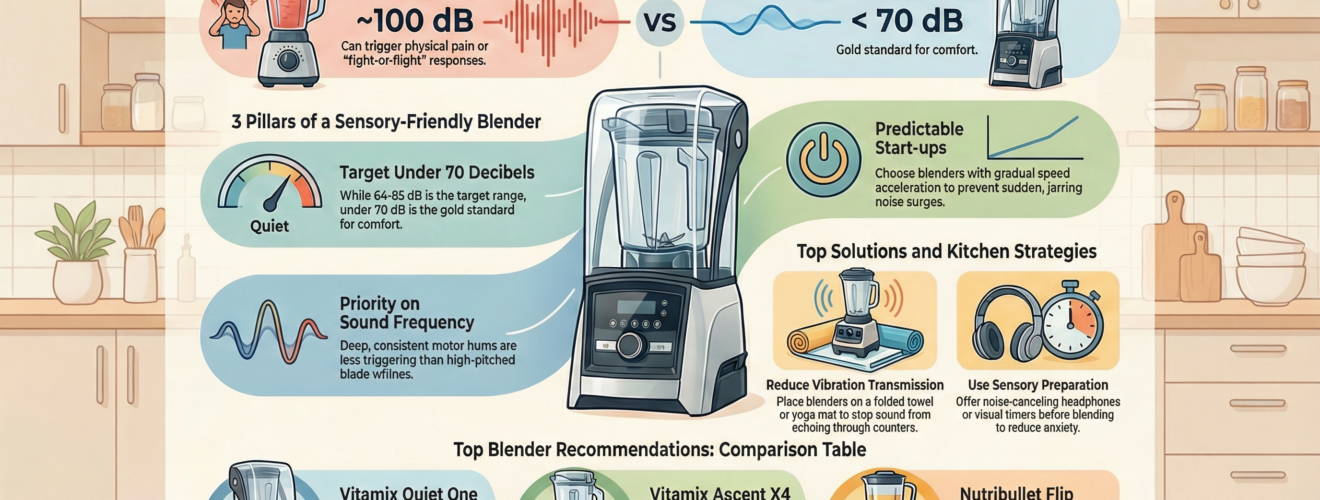
According to sensory processing research, individuals with autism often experience auditory hypersensitivity. Everyday sounds like blenders can feel overwhelming or even physically painful. Blenders can reach 90-100 decibels, which is equivalent to a motorcycle. The unpredictability of the sudden motor start-up, the high-pitched blade sound, and the sustained duration all contribute to sensory overload.
But here’s what most “quiet blender” reviews miss: You should not choose between nutritious smoothies and your child’s sensory comfort. The right low-noise blender can transform kitchen routines from triggering to tolerable—and sometimes even comfortable.
We analyzed dozens of quiet blenders. We consulted with autism families, occupational therapists, and sensory processing experts. As a result, we’ve identified the 5 best options. These options actually understand what “sensory-friendly” means.
What Makes a Blender Truly “Sensory-Friendly”? (Beyond Just Decibels)
Most blender reviews focus exclusively on decibel ratings. While important, that’s only part of the story for sensory-sensitive households.
The 4 Sensory Factors That Actually Matter:
1. Decibel Level (Loudness)
- Target range: 64-85 dB (conversation to vacuum level)
- Why it matters: Lower decibels reduce auditory pain and anxiety triggers
- Gold standard: Under 70 dB during operation
2. Sound Frequency (Pitch)
- The hidden factor: High-frequency whining is often more triggering than overall volume
- What to look for: Deeper, consistent motor hum vs. high-pitched blade whine
- Why it matters: Many with auditory sensitivity find certain frequencies unbearable regardless of volume
3. Predictability (Start-up Surge)
- The problem: Sudden loud motor starts create startle responses
- Better option: Gradual speed acceleration or sound enclosures that buffer the initial surge
- Real-world impact: Reduces fight-or-flight response activation
4. Vibration and Ambient Noise
- Often overlooked: Counter vibration transmits sound through the whole kitchen
- What helps: Rubber feet, sound-dampening bases, heavier motors
- Bonus: Some families report success placing blenders on folded towels or foam pads
The 5 Best Low-Noise Blenders for Sensory-Sensitive Homes (2026)
1. Vitamix Ascent X4 – Best Overall for Autism Families
Decibel Rating: ~70-75 dB
Price Range: $$$$ (Premium)
Our Verdict: ⭐⭐⭐⭐⭐
Why It’s Sensory-Friendly: The Vitamix Ascent X4 represents the gold standard for powerful yet quiet blending. What sets it apart for sensory-sensitive homes isn’t just the reduced noise—it’s the predictable, consistent sound profile. The motor maintains a steady, lower-frequency hum rather than fluctuating pitches that can trigger auditory sensitivities.
Key Features:
- Self-cleaning function (less handling time = less exposure)
- Variable speed control (gradual acceleration, not jarring starts)
- Heavy base minimizes counter vibration
- 10-year warranty (built to last through daily sensory-friendly meal prep)
Real Parent Perspective: “Before the Ascent X4, I’d have to warn my daughter 5 minutes before making smoothies. She would put on noise-canceling headphones and go to another room. Now she can stay in the kitchen. That’s not just convenience—that’s inclusion in family life.” – Sarah M., autism mom
Best For: Families who can invest in a premium appliance and need maximum versatility plus minimal sensory impact
2. Vitamix Quiet One – Best Commercial-Grade Option
Decibel Rating: ~64 dB (quietest on our list)
Price Range: $$$$ (Commercial pricing)
Our Verdict: ⭐⭐⭐⭐⭐
Why It’s Sensory-Friendly: The Quiet One was originally designed for coffee shops where conversation matters. It features advanced noise-dampening technology. There is a magnetically secured sound enclosure. It operates at about 64 decibels—quieter than normal conversation.
Key Features:
- Sound enclosure creates physical barrier between motor noise and kitchen space
- 3-horsepower motor (power without roar)
- 6 preset programs + 34 settings (set it and step away)
- 48-oz shatterproof container
Occupational Therapist Insight: “The predictability of preset programs is underrated for executive function challenges common in autism. One button press, no decisions about speed or duration mid-blend.” – Dr. Jennifer K., pediatric OT
Best For: Homes where multiple family members have sensory sensitivities or ADHD, cafés/small businesses run by neurodivergent entrepreneurs
3. Blendtec Professional 800 – Best for Gradual Sensory Exposure
Decibel Rating: ~75-80 dB (80% quieter than typical blenders)
Price Range: $$$ (High-end)
Our Verdict: ⭐⭐⭐⭐½
Why It’s Sensory-Friendly: The Professional 800’s 11-speed capacitive touch slider allows for gradual sensory exposure. It starts at whisper-quiet low speeds. The speed builds up only as needed. The sealed sound enclosure plus motor base dampening creates a “double barrier” against noise transmission.
Key Features:
- Touch-screen controls (no loud button clicks)
- Stealth technology noise dampening
- Wildside jar design reduces turbulence (= quieter blending)
- 10-year warranty
Sensory Processing Strategy: Use the speed slider for systematic desensitization. Start your child at speed 1 (nearly silent). Gradually increase the speed over weeks or months as their tolerance builds. This transforms the blender from trigger to therapeutic tool.
Best For: Families practicing gradual sensory desensitization, those who want commercial performance with accessible pricing
4. Nutribullet Flip – Best Budget-Friendly Option
Decibel Rating: ~82-85 dB (noticeably quieter than standard blenders)
Price Range: $ (Under $100)
Our Verdict: ⭐⭐⭐⭐
Why It’s Sensory-Friendly: Don’t let the budget price fool you. The Nutribullet Flip delivers impressive noise reduction through smart engineering. It features a smaller, more efficient motor that doesn’t have to work as hard. Additionally, it has a compact design that contains sound better than sprawling bases.
Key Features:
- Personal-size portions (shorter blending time = less exposure)
- 900W motor (efficient power-to-noise ratio)
- Portable design (can blend away from main living spaces if needed)
- Simple one-button operation
Financial Reality Check: Many families navigate therapy costs, special education expenses, and medical bills. Spending $500+ on a blender isn’t always feasible for them. The Flip proves sensory-friendly doesn’t have to mean financially inaccessible.
Best For: Budget-conscious families, single servings, college students with sensory needs, first-time quiet blender buyers
5. Hamilton Beach Professional Quiet Shield – Best Mid-Range Compromise
Decibel Rating: ~78-82 dB
Price Range: $$ (Mid-range)
Our Verdict: ⭐⭐⭐⭐
Why It’s Sensory-Friendly: The removable sound shield makes this the most adaptable option on our list. Good sensory day? Blend without the shield for easier cleaning. Challenging sensory day? Full shield for maximum noise reduction.
Key Features:
- Removable quiet shield (flexibility for varying sensory needs)
- 1,500-watt motor with stainless steel blades
- Pre-programmed clean cycle
- 5-year warranty
Adaptive Use Strategy: Pair with a visual timer so your child knows exactly how long the noise will last. Predictability + controllable duration = reduced anxiety response.
Best For: Families with fluctuating sensory sensitivities, those wanting flexibility between easy cleaning and maximum quiet
Beyond the Blender: Creating a Complete Sensory-Friendly Kitchen Environment
The blender itself is only part of the equation. Here’s how to maximize sensory comfort:
Before You Blend:
1. Establish Predictable Routines
- Use visual schedules showing “blender time”
- Set consistent times (e.g., “smoothies after breakfast”) so it’s anticipated, not surprising
- Consider a countdown timer: “Blender starts in 3 minutes”
2. Offer Sensory Preparation
- Noise-canceling headphones or earplugs (Loop or 3M Push-Ins recommended by audiologists)
- Alternative room option without pressure or shame
- Deep pressure vest or weighted lap pad before/during blending
3. Minimize Vibration Transmission
- Place blender on folded towel or yoga mat
- Avoid hollow counters that amplify sound
- Consider a small cutting board under the blender base
During Blending:
4. Control Duration
- Use preset programs that auto-shut off
- Prep ingredients well (smaller pieces = faster blending = shorter exposure)
- Consider pulse mode for gradual sound introduction
5. Provide Competing Sensory Input
- Gentle background music at preferred volume
- Visual stimming tools (liquid timer, fidget)
- Proprioceptive activities (wall pushes, squeezes)
After Blending:
6. Recovery and Regulation
- Quiet space immediately available
- Praise participation/tolerance without pressure
- Sensory-soothing activities (weighted blanket, dim lighting, favorite texture)
What Other Autism Parents Are Asking (FAQ)
Q: My child has severe auditory sensitivity. Will ANY blender work?
A: For extreme sensitivities, consider a three-pronged approach:
- Choose the Vitamix Quiet One (64 dB – quietest option)
- Blend in garage/basement/outdoor space when possible
- Pair with noise-canceling headphones rated for 25+ dB reduction
Some families report success with scheduling blending during therapy sessions. This occurs during school hours when the sensitive individual is out of the house.
Q: Are there completely silent blenders?
A: No blender is truly silent—the physics of high-speed blending requires motor noise. However, 64-70 dB options approach “normal conversation” levels. Many with auditory sensitivities can tolerate these levels, especially with preparation and gradual exposure.
Q: How do I know if my child can handle a “quiet” blender?
A: Start with:
- Demonstration: Show videos of the specific blender model at full volume
- Gradual exposure: Let them observe from another room, then doorway, then kitchen
- Control: Allow them to press the button (sense of control reduces anxiety)
- Escape route: Always ensure they can leave without shame
Q: Can quiet blenders handle frozen fruits and ice?
A: Absolutely. The Vitamix models and Blendtec Professional 800 are specifically engineered for crushing ice and frozen ingredients. They maintain low noise levels. The key is powerful, efficient motors—not loud, struggling ones.
Q: Is it worth paying premium prices for quiet blenders?
A: This depends on your family’s specific situation:
- High sensory sensitivity: Premium options like Vitamix Quiet One can be life-changing
- Moderate sensitivity: Mid-range options like Hamilton Beach provide good results
- Budget constraints: Nutribullet Flip offers meaningful improvement over standard blenders
Consider the long-term value. A $500 blender may enable nutritious meals without daily sensory trauma. This benefit is potentially priceless for quality of life.
Comparison Chart: At-a-Glance Selection Guide
| Model | Decibels | Price | Best For | Warranty |
|---|---|---|---|---|
| Vitamix Ascent X4 | 70-75 dB | $$$$ | Overall best quality + quiet | 10 years |
| Vitamix Quiet One | 64 dB | $$$$ | Quietest option | 3 years |
| Blendtec Pro 800 | 75-80 dB | $$$ | Gradual exposure therapy | 10 years |
| Nutribullet Flip | 82-85 dB | $ | Budget-friendly | 1 year |
| Hamilton Beach Quiet Shield | 78-82 dB | $$ | Adaptable/flexible | 5 years |
The Bigger Picture: Why Sensory-Friendly Kitchens Matter
Choosing a low-noise blender isn’t just about convenience or comfort—it’s about inclusion and independence.
When we create sensory-friendly environments, we:
- Reduce daily trauma: Constant sensory overload isn’t character-building; it’s exhausting and harmful
- Enable participation: Children who can tolerate kitchen sounds can learn cooking skills, participate in meal prep, and develop independence
- Model advocacy: Teaching our children that their sensory needs matter sets the foundation for self-advocacy
- Improve nutrition: Fewer sensory barriers = more acceptance of healthy smoothies and pureed foods
The blender motor might be just one sound among many, but addressing it sends a powerful message: Your comfort matters. Your sensory experience is valid. We will adapt our environment to include you.
Final Recommendations: Which Blender Should YOU Choose?
Choose the Vitamix Ascent X4 if:
- Quality and performance matter as much as quiet operation
- You want a long-term investment (10-year warranty)
- Budget allows for premium pricing
- You need versatility for various recipes
Choose the Vitamix Quiet One if:
- Maximum noise reduction is the absolute priority
- Multiple family members have sensory sensitivities
- You’re willing to invest in commercial-grade equipment
- Preset programs align with executive function needs
Choose the Blendtec Professional 800 if:
- You’re practicing systematic desensitization
- You want high-end performance under $600
- Touch controls appeal over buttons
- 10-year warranty is important
Choose the Nutribullet Flip if:
- Budget is a primary concern (under $100)
- You mainly make single-serving smoothies
- Portability matters (college, small kitchen, traveling)
- You want to test “quiet” before major investment
Choose the Hamilton Beach Quiet Shield if:
- Sensory needs fluctuate day-to-day
- You want mid-range pricing with good performance
- Easy cleaning matters (removable shield)
- 5-year warranty provides confidence
Where to Buy These Blenders
All models are available through:
- Amazon: Often best prices with Prime shipping
- Target/Walmart: Price matching available
- Manufacturer Direct: Vitamix and Blendtec websites (sometimes include free shipping)
- Costco: Excellent return policy for trial periods
Pro Tip: Many retailers have 30-90 day return policies. Test a blender during a low-stress period. Determine if the noise level suits your family’s specific sensory profile.
Conclusion: You Deserve a Kitchen That Works for Your Whole Family
Blender shopping when you have a sensory-sensitive family member shouldn’t require choosing between nutrition and comfort. The quiet blender market has evolved dramatically, offering genuine solutions at various price points.
You might invest in the whisper-quiet Vitamix Quiet One. Alternatively, you could start with the accessible Nutribullet Flip. Either way, you’re making a meaningful choice. This choice leads to a more inclusive, less triggering home environment.
Your child’s sensory sensitivities are real. Your need for convenient, healthy meal preparation is valid. With the right low-noise blender, both can coexist.
Remember: The “best” blender isn’t the quietest or the most expensive. It’s the one that enables your family to thrive together, smoothies and all.
Additional Resources for Sensory-Sensitive Families
- National Autism Resources: Calming products and sensory tools
- ASHA (American Speech-Language-Hearing Association): Auditory processing resources
- Sensory Processing Disorder Foundation: Environmental adaptation guides
- ADDitude Magazine: ADHD and sensory sensitivity intersection
Have you found a quiet blender that works for your sensory-sensitive home? Share your experience in the comments below to help other autism families make informed decisions.
Last updated: February 2026 | All prices and specifications subject to change
Keywords: low-noise blenders, quiet blenders for autism, sensory-friendly kitchen appliances, blenders for sensory sensitivity, autism-friendly blenders, auditory hypersensitivity solutions, quiet Vitamix, Blendtec quiet blender, sensory-sensitive homes, ADHD quiet appliances
Discover more from Living with Autism
Subscribe to get the latest posts sent to your email.