Environmental Factors in Autism: What the Research Shows (2026 Update)
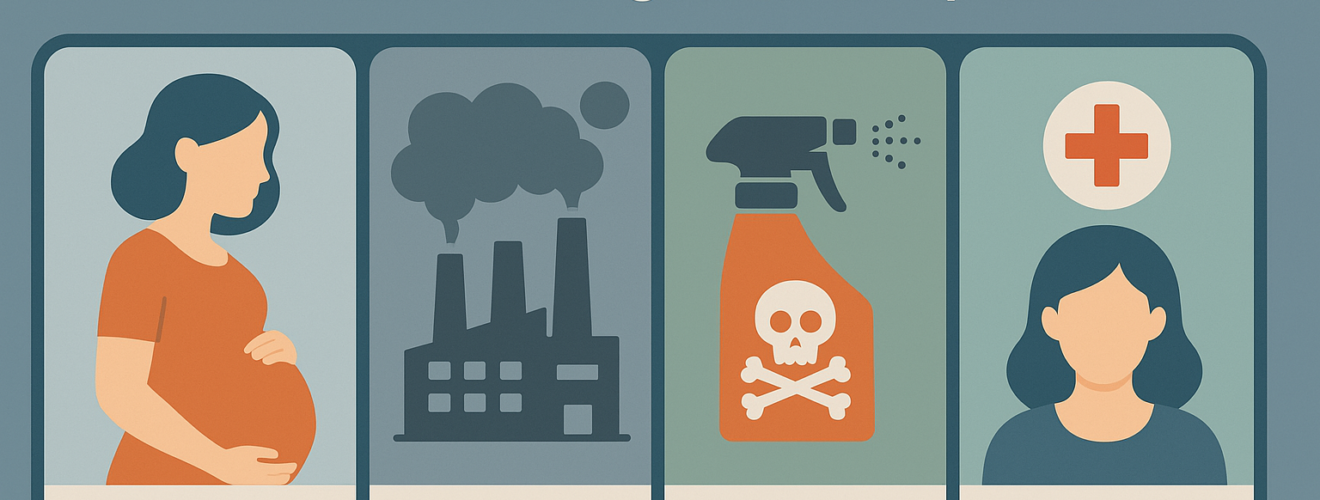
Quick answer: Autism is mostly genetic: twin and family studies put heritability at roughly 80%. Some environmental factors, almost all acting before birth, are linked to a modestly higher likelihood: older parents, preterm birth, certain pregnancy complications, prenatal valproate (an epilepsy drug) and high air pollution. Large studies have found no link with vaccines, and the best-controlled studies find no link with acetaminophen (Tylenol) in pregnancy.
Correction note (November 2026): An earlier version of this page included quotes attributed to named researchers that we could not verify, an outdated prevalence figure (1 in 36), an air-pollution statistic we could not match to its source, a broken link and a placeholder author bio. We removed them, rewrote the page around primary sources and added the 2025–2026 developments below.
Contents
- Genes vs. environment: what “risk factor” means
- Environmental factors and the strength of the evidence
- What changed in 2025–2026: acetaminophen and vaccines
- Why are more children diagnosed?
- What this means for parents
- FAQ
- Sources
Genes vs. Environment: What “Risk Factor” Means
A study of more than 2 million children in five countries estimated the heritability of autism at about 80% (Bai et al., 2019). That means most of the difference in who is autistic is explained by genes, many of them common variants with small effects, plus some rare or new (de novo) changes. The remaining share is “non-inherited”, which includes random developmental events as well as true environmental exposures.
When research calls something an environmental risk factor, it usually means a statistical association in large populations: autism is somewhat more common in children with that exposure. It does not mean the exposure causes autism in a given child, and most children with any of these exposures are not autistic. Associations can also be “confounded”: a shared genetic or family factor can explain both the exposure and the autism. Studies that compare siblings, or use other ways to control for family background, are the strongest test of this.
Environmental Factors and the Strength of the Evidence
| Factor | What the research shows | Strength |
|---|---|---|
| Older parents | Autism is more common as both maternal and paternal age rise, and also with very young mothers (Sandin et al., 2016, 5.7 million children). Part of this may reflect parents’ own genetics rather than age itself. | Consistent association; absolute risk stays low |
| Preterm birth, low birth weight | Autism is more common in babies born early, and more so the earlier they are born. | Consistent association |
| Pregnancy complications | Maternal diabetes, preeclampsia, obesity and serious infection with fever have all been linked to modestly higher rates. Confounding is hard to rule out. | Moderate; mechanisms unclear |
| Valproate in pregnancy | A Danish study of 655,615 children found autism in about 4.4% of children exposed to valproate vs. about 1.5% of unexposed children (Christensen et al., 2013). Regulators now restrict valproate for women who could become pregnant. Never stop an epilepsy medicine without talking to your doctor. | Strong; one of the clearest drug links |
| Air pollution | Higher exposure to traffic-related pollution and fine particles (PM2.5) during pregnancy has been linked to higher autism rates in several US studies (Volk et al., 2013; Raz et al., 2015). Results across countries are mixed. | Moderate; not proven causal |
| Folic acid | In a Norwegian cohort of 85,176 children, mothers who took folic acid around conception had a lower rate of autistic disorder (Surén et al., 2013). Folic acid is recommended before and during pregnancy anyway. | Suggestive, possibly protective |
| Vitamin D, omega-3, pesticides, heavy metals | Studied, with mixed or inconsistent results. | Uncertain |
| Acetaminophen (Tylenol) in pregnancy | Some studies found an association, but it disappears in sibling comparisons (Ahlqvist et al., 2024; Lancet review, 2026). See below. | No link in the best-controlled studies |
| Vaccines (MMR, thimerosal, aluminum) | No link in studies of millions of children (Taylor et al., 2014; Hviid et al., 2019; Andersson et al., 2025). | No association found |
A scoping review of 315 studies published between 2003 and 2013 grouped these factors into chemical, physiological, nutritional and social themes and reached broadly the same picture: parental age, preterm birth and pregnancy complications were the most consistent findings, and vaccines showed no association (Karimi et al., 2017). The same review noted higher autism diagnoses among children of immigrant mothers in some countries; this may reflect access to care, diagnosis practices or other factors, and it is not a cause.
What Changed in 2025–2026: Acetaminophen and Vaccines
Acetaminophen (Tylenol) during pregnancy
In September 2025, US federal health officials said acetaminophen should be used in pregnancy only when needed and announced a public information campaign, citing studies that found an association with autism and ADHD. Earlier, a sibling-comparison study of almost 2.5 million Swedish children had found that the association seen in the whole population disappeared when siblings were compared (Ahlqvist et al., JAMA, 2024). In January 2026, a systematic review and meta-analysis in The Lancet Obstetrics, Gynaecology & Women’s Health that focused on the most rigorous studies, including sibling designs, found no association between acetaminophen in pregnancy and autism, ADHD or intellectual disability. Obstetric bodies such as ACOG and the UK’s RCOG continue to recommend acetaminophen as the preferred pain and fever reliever in pregnancy when used as directed. Untreated high fever in pregnancy carries its own risks, so ask your clinician rather than avoiding treatment.
Vaccines
The research evidence did not change: a 2019 Danish study of 657,461 children found no increase in autism after MMR vaccination, including in children with an autistic sibling (Hviid et al., 2019), and a 2025 Danish study of about 1.2 million children found no link between aluminum in childhood vaccines and autism (Andersson et al., 2025). What changed was the CDC’s “Autism and Vaccines” webpage. In November 2025 it was rewritten to say that the claim “vaccines do not cause autism” is not evidence-based, a change widely criticized by scientists and medical groups. In July 2026 the wording was revised again; the page now notes that scientists have not identified the root causes of autism and that HHS will update the page as new evidence becomes available. Major medical organizations, including the American Academy of Pediatrics, continue to state that vaccines do not cause autism.
Why Are More Children Diagnosed?
The CDC’s latest ADDM estimate (2022 data, published 2025) is about 1 in 31 eight-year-olds, up from 1 in 36 in the previous report. Most researchers attribute most of the long-term rise to broader diagnostic criteria, more screening, better recognition in girls, adults and children of color, and more services that require a diagnosis. Older average parental age may contribute a small part. There is no evidence that a single new environmental exposure explains the increase.
What This Means for Parents
- It is not your fault. Autism is mostly genetic and develops before birth. Nothing a parent did after birth, and no ordinary everyday exposure, has been shown to cause it.
- Planning a pregnancy? Take folic acid, keep up prenatal care, manage diabetes and blood pressure, treat fevers and infections, and review every prescription (especially epilepsy drugs) with your doctor. These steps support a healthy pregnancy generally; none of them guarantees an outcome.
- Be wary of products sold as “autism detox” or prevention. Chelation, supplements or diets marketed this way are not supported by evidence and some can be harmful.
- Focus on support, not cause. If you notice signs, start with our guide to common autism signs, try the M-CHAT toddler screener, or read how the ADOS-2 assessment works.
Frequently Asked Questions
Do vaccines cause autism?
No. Large studies following millions of children, including siblings of autistic children, have found no link between vaccines (MMR, thimerosal or aluminum adjuvants) and autism. The CDC webpage wording changed in 2025–2026, but the research evidence did not.
Does taking Tylenol during pregnancy cause autism?
The best-controlled studies say no. Population studies found a small association, but it disappears when siblings are compared (Ahlqvist et al., 2024), and a 2026 Lancet review of the most rigorous studies found no link. Use acetaminophen as directed and ask your clinician if you have questions.
Can air pollution cause autism?
Several studies link higher pollution exposure during pregnancy to somewhat higher autism rates, but it has not been proven to be a cause, and results vary between countries. Any effect appears small compared with genetics.
Does the age of the parents matter?
Yes, a little. Autism is more common as parents get older, especially fathers, but the absolute likelihood remains low and most children of older parents are not autistic.
Can autism be prevented?
There is no known way to prevent autism. Good prenatal care, folic acid and careful use of medicines support a healthy pregnancy, but they are not autism prevention.
Sources
- Bai D, et al. Association of genetic and environmental factors with autism in a 5-country cohort. JAMA Psychiatry. 2019;76(10):1035–1043. doi:10.1001/jamapsychiatry.2019.1411
- Sandin S, et al. Autism risk associated with parental age and with increasing difference in age between the parents. Molecular Psychiatry. 2016;21:693–700. doi:10.1038/mp.2015.70
- Christensen J, et al. Prenatal valproate exposure and risk of autism spectrum disorders and childhood autism. JAMA. 2013;309(16):1696–1703. doi:10.1001/jama.2013.2270
- Volk HE, et al. Traffic-related air pollution, particulate matter, and autism. JAMA Psychiatry. 2013;70(1):71–77. doi:10.1001/jamapsychiatry.2013.266
- Raz R, et al. Autism spectrum disorder and particulate matter air pollution before, during, and after pregnancy. Environmental Health Perspectives. 2015;123(3):264–270. doi:10.1289/ehp.1408133
- Surén P, et al. Association between maternal use of folic acid supplements and risk of autism spectrum disorders in children. JAMA. 2013;309(6):570–577. doi:10.1001/jama.2012.155925
- Ahlqvist VH, et al. Acetaminophen use during pregnancy and children’s risk of autism, ADHD, and intellectual disability. JAMA. 2024;331(14):1205–1214. doi:10.1001/jama.2024.3172
- Prenatal paracetamol exposure and child neurodevelopment: a systematic review and meta-analysis. The Lancet Obstetrics, Gynaecology & Women’s Health. January 2026. thelancet.com
- Taylor LE, Swerdfeger AL, Eslick GD. Vaccines are not associated with autism: an evidence-based meta-analysis. Vaccine. 2014;32(29):3623–3629. doi:10.1016/j.vaccine.2014.04.085
- Hviid A, et al. Measles, mumps, rubella vaccination and autism: a nationwide cohort study. Annals of Internal Medicine. 2019;170(8):513–520. doi:10.7326/M18-2101
- Andersson NW, et al. Aluminum-adsorbed vaccines and chronic diseases in childhood: a nationwide cohort study. Annals of Internal Medicine. 2025.
- Karimi P, et al. Environmental factors influencing the risk of autism. Journal of Research in Medical Sciences. 2017;22:27.
- CDC. Data and Statistics on Autism Spectrum Disorder (ADDM Network, 2022 surveillance year). cdc.gov
- NIEHS. Autism. niehs.nih.gov
Discover more from Living with Autism
Subscribe to get the latest posts sent to your email.




That is one good thing to know that multiple factors work together with Autism. The genetic factor and environmental exposures.Of course the genetic factor is the strongest influence, and sometimes runs in families. Or a single gene mutatiion can play a role. There are also prenatal biological influences, brain development differences. These differences begin before birth, during early brain development. And what does not cause Autism is vaccines, parenting style, diet, and screen time.It’s not one thing. It’s the combination and interaction of factors that shapes how the brain develops.